Shopping used during Boise’s busiest summer weeks? Flood clues can hide in plain sight.
Flood-damaged vehicles often look “fine” after detailing, yet water intrusion can quietly corrode wiring, compromise safety systems, and create ongoing electrical problems months later. National safety guidance warns that flood damage may not show up right away—especially in electronics, brakes, airbags, and seatbelt systems. If you’re a research-driven buyer comparing listings shipped in from flood-prone regions, this checklist helps you screen a car quickly before you commit to a purchase or long drive home.
Why flood damage is a “long-tail” problem
Floodwater doesn’t just “get things wet.” It can leave behind silt, minerals, and contamination that accelerate corrosion inside connectors, control modules, and grounds. Even if the interior dries, hidden moisture can lead to mold odors and intermittent electrical faults. Consumer and safety agencies caution that flood exposure can affect critical systems (airbags, brakes, electronics) and the damage may not be obvious at the time of sale.
Fast “walk-around” checklist (5 minutes)
1) Smell test (yes, it matters)
Open the door and pause. Musty or mildew odor is a classic red flag. Also be cautious if the car smells strongly “perfumed” or over-deodorized—it can be used to mask moisture and mold.
2) Check lights, switches, and screens
Turn the key on and confirm everything behaves normally: power windows, mirrors, locks, infotainment, backup camera, HVAC blower at all speeds, and wipers. Flood damage often shows up as odd electrical glitches—especially after “everything looks clean.”
3) Look for corrosion where detailers can’t hide it
Focus on seat tracks/bolts under the front seats, exposed metal brackets, and fasteners in the footwells. Rust, white mineral deposits, or unusual corrosion in these tucked-away areas can indicate prior water exposure.
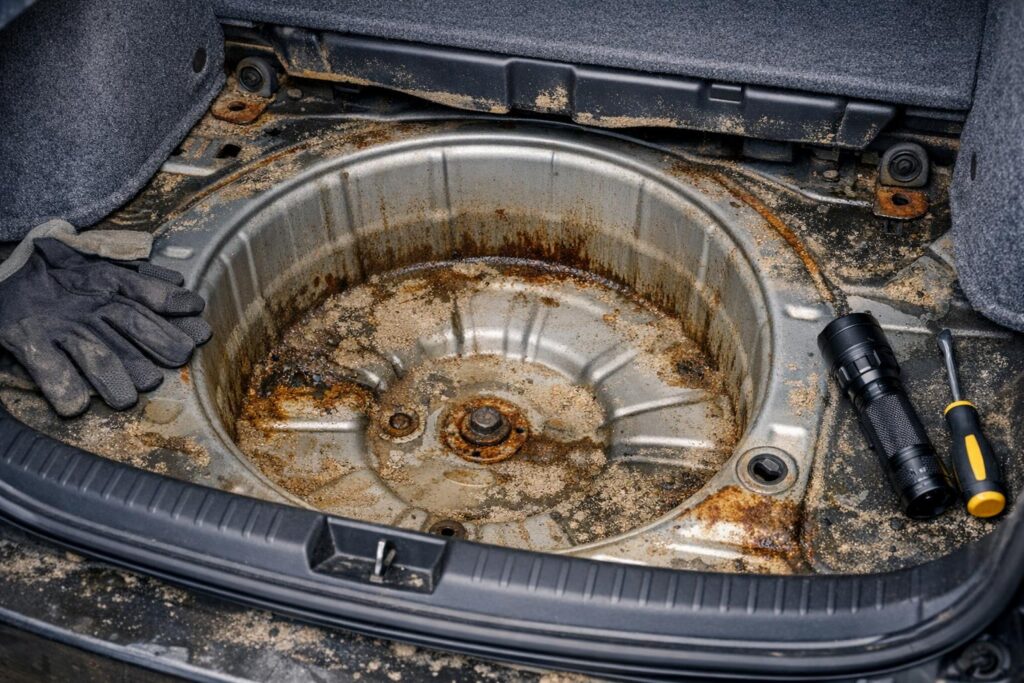
4) Trunk + spare tire well: the “tell” spot
Lift the trunk liner and check the spare tire well. Water lines, dampness, silt, or staining in this area are strong flood indicators. If you see a clean-looking trunk but a stained spare well, assume the car took on water.
Deeper DIY checks before you negotiate (15–30 minutes)
Pull back the carpet edge (carefully)
Check the carpet padding near the sill/door area. If the padding is stiff, crumbling, discolored, or smells off, that’s not normal wear. Flood cars can be shampooed on top while the padding underneath still tells the story.
Inspect hidden nooks for silt
Use a flashlight and look inside: under the dashboard near wiring, inside the glovebox seams, around seat mounts, and in the trunk corners. Mud/silt in protected crevices is a major warning sign.
Scan the VIN + title history (don’t skip this)
Use multiple sources when possible: vehicle history reports and the free VINCheck tool from the National Insurance Crime Bureau (NICB) can help identify reported flood/salvage events. If the vehicle has moved rapidly between states after a major storm or flood event, treat it as higher risk and prioritize an independent inspection.
What a professional pre-purchase inspection should confirm
If you’re buying during peak season and inventory is moving fast, a pre-purchase inspection is your “slow down” button. Flood-related issues are often electrical and safety-related—exactly the kind of problems you want identified before ownership.
| Inspection Area | What We Look For | Why It Matters |
|---|---|---|
| Full-system scan | Stored/hidden codes, module communication faults, readiness data | Flood exposure can trigger intermittent electrical issues and safety module faults |
| SRS/airbag + seatbelt systems | Warning lamps, module data, connector integrity, signs of tampering | Safety agencies warn flood damage can affect airbags and other critical systems |
| Underbody + brake hardware | Abnormal rust patterns, seized components, contaminated connectors | Braking and stability systems rely on sensors and wiring near splash zones |
| Interior structure | Seat mounts, harness routing, evidence of water lines/silt | Hidden corrosion here often predicts future electrical headaches |
| Hybrid-specific checks (if applicable) | Hybrid battery cooling path, HV safety indicators, related codes | Water intrusion risks are different—and more serious—on electrified platforms |
Local pro tip for Boise buyers
If a seller is pushing urgency (“three other buyers are coming today”), use that urgency to request verification: allow an independent inspection, provide the VIN early, and agree in writing on what happens if flood indicators are found. A legitimate seller rarely objects to basic transparency.
Quick “Did you know?” flood-car facts
A clean-looking interior isn’t proof.
Flood cars can be detailed and deodorized while corrosion continues behind panels and inside connectors.
The spare-tire well is a frequent giveaway.
Water lines and staining here are hard to explain away as “normal use.”
Safety systems can be affected.
Flood exposure can impact braking, airbags, and electronics—even if the car starts and drives.
A Boise-area angle: why this matters even if Idaho isn’t “coastal”
Boise’s summer used-car market often includes vehicles shipped in from out of state to meet demand. That’s where flood risk sneaks in—especially when a vehicle has recent registration changes tied to flood-prone regions. If you’re shopping from Boise, Meridian, Nampa, Caldwell, Eagle, Kuna, Star, Middleton, Garden City, or Emmett, plan for an inspection buffer in your timeline. It’s faster (and cheaper) to confirm a vehicle’s condition before purchase than to chase persistent electrical issues afterward.
Want a second set of eyes before you buy?
Naylor’s Auto Repair in Boise provides thorough pre-purchase inspections that help you spot flood indicators, verify safety system status, and understand what you’re really buying—before paperwork and surprises.
Helpful to know: qualifying repairs are backed by Naylor’s included 2-year/24,000-mile nationwide warranty. See warranty details
FAQ: Flood damage signs in a used car
Can a used car have flood damage even if the title is clean?
Yes. Not every flood exposure results in immediate title branding, and reporting can lag. That’s why a physical inspection (especially trunk/spare well, under-seat corrosion, and electronics behavior) is so important.
What’s the single biggest red flag for flood damage?
Evidence of water lines or silt—especially in the spare tire well or hidden interior seams—paired with musty odor or electrical oddities. Any one of these can happen for other reasons, but the combination is high risk.
Is it safe to buy a flood-damaged vehicle if it “drives fine”?
It may drive fine now and still be unsafe or unreliable later. Flood exposure can affect brakes, airbags, and electronics, and problems may show up over time rather than immediately.
Should I avoid hybrids if I’m worried about water intrusion?
You don’t need to avoid hybrids—just verify them carefully. Hybrid and EV-adjacent systems add components that should be checked with the right scan tools and procedures. If the vehicle’s history or physical clues suggest flooding, have a hybrid-trained shop evaluate it before purchase.
Glossary (plain-English)
SRS (Supplemental Restraint System)
The airbag and seatbelt pretensioner system. It relies on sensors and control modules—components that can be sensitive to corrosion and moisture.
Control module
A small computer that controls a vehicle system (like ABS, airbags, or engine management). Flood exposure can cause internal corrosion or connector damage.
Spare tire well
The recessed area in the trunk (or cargo floor) where the spare tire sits. It’s a common place for flood evidence because water collects and leaves a visible line or staining.
Looking for more local support? Explore local auto repair in Boise and keep an eye on current specials if you’re coordinating inspection and follow-up service.