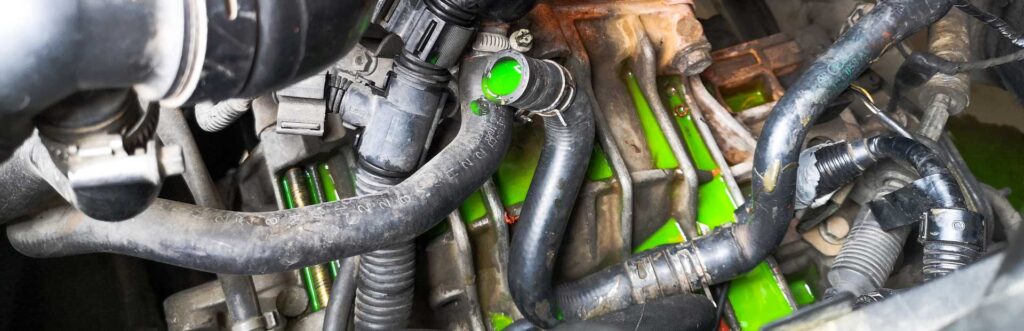
What to Do If Your Car Is Leaking Coolant
Under the hood of every vehicle, you’ll find the all-important cooling system. It’s built from a series of hoses, fans, pumps, and fluid. This fluid, or coolant, is essential in transferring heat away from the car’s engine and out into the air, preventing it from overheating and causing significant damage.
At Naylor’s Auto Repair, we diagnose and repair cooling system issues for Boise drivers every day. Even in a well-maintained vehicle, coolant can begin to leak and become ineffective. If you notice signs of a problem, it’s important to act quickly before minor damage turns into major engine repairs.
The Most Common Signs of a Coolant Leak
Coolant Pooling
One of the most obvious signs is spotting a pool of coolant under your car. Coolant comes in various colors, including blue, red, green, violet, yellow, or orange. If it’s been in your car for a while, it might look brownish due to contaminants. If you are unsure whether your car has a leak, place a piece of cardboard underneath to catch any potential drips.
Distinctive Odor
Coolant has a unique, sweet smell, almost like maple syrup. If you start to notice this aroma while driving or after parking, it’s a clear sign of a coolant leak.
Oil Issues
If you spot frothy bubbles or the presence of oil in the radiator or header tank, it’s a sign of a coolant leak. This mixture can lead to significant engine problems if not addressed promptly.
Steam
If steam starts coming from under the hood while driving, it’s a clear indication that coolant is leaking onto hot engine parts. Pull over as quickly and safely as possible and turn off the car to prevent damage to the engine or cooling system.
Dashboard Warning
Modern cars have sensors that detect low coolant levels. If your check engine light illuminates, it might be due to a coolant leak. Learn more about what to do when your check engine light comes on so you can take the right next steps. You can also check the coolant reservoir under the hood to confirm if the levels are low.
Engine Temperature
If the temperature gauge on your dashboard indicates that the engine is hotter than usual, it’s a sign that there’s not enough coolant circulating. Try to pull over, turn off the car, and let it cool before driving again. If possible, arrange to have your vehicle inspected rather than continuing to drive.
Drip Monitoring
While some dripping is normal—especially after using the air conditioner—an increase in the size or frequency of puddles under your car is cause for concern. If there is a steady flow of fluid coming from under the car, pull over or get the car to a repair shop as quickly as possible.
What Are the Average Causes of Coolant Leaks?
Coolant leaks can come from either external or internal parts, each with its own unique causes that drivers should be aware of.
External Coolant Leaks
Over time, radiator hoses can wear out, leading to small holes or tears.
The points where hoses connect to the engine or radiator can weaken, leading to leaks.
The coolant reservoir can crack or get damaged, causing leaks.
Not having enough coolant fluid in the system can cause the engine to overheat, leading to increased pressure and leaks.
Internal Coolant Leaks
A blown head gasket is a major issue and can lead to coolant mixing with oil in the engine.
Over time, radiators can corrode, leading to leaks.
If the radiator cap doesn’t hold pressure due to being faulty or deteriorated, it can cause leaks.
The seal or the water pump itself can fail, leading to a leak.
Cracks or damage in the expansion tank can also lead to leaks.
Because the cooling system directly impacts engine health, addressing these problems early is part of proper auto maintenance services that maintain a healthy engine.
How Long Can You Drive a Car With a Coolant Leak?
While a minor leak might not seem like a big deal, it’s essential to address it as soon as possible. Even a small leak can lead to the engine overheating, causing significant damage. In some cases, you might be able to drive for a short distance, but it’s always best to get the issue addressed immediately.
Without having a mechanic properly repair the issue, the engine can continue to overheat and suffer internal damage until it is no longer drivable. Severe overheating can lead to warped cylinder heads, a blown head gasket, or complete engine failure—repairs that are far more costly than fixing a leak early.
Frequently Asked Questions About Coolant Leaks
Is it safe to drive with a small coolant leak?
It’s not recommended. Even a small leak can quickly worsen and cause your engine to overheat. If you notice low coolant levels or rising engine temperatures, have your vehicle inspected as soon as possible.
Can I just keep adding coolant instead of fixing the leak?
Adding coolant may temporarily prevent overheating, but it does not solve the underlying issue. Continuing to top off coolant without repairing the leak can result in serious engine damage.
How much does it cost to fix a coolant leak?
The cost depends on the source of the leak. A worn hose or loose clamp is typically less expensive to repair than a blown head gasket or failing water pump. A proper diagnosis is the first step to determining repair costs.
What color is leaking coolant?
Coolant can be green, orange, pink, red, yellow, or blue, depending on the type used in your vehicle. If it appears brown, it may be contaminated. Identifying the color can help determine whether the leak is coolant or another fluid.
What happens if my engine overheats from a coolant leak?
If your engine overheats, internal components can warp or crack. This can lead to major repairs such as head gasket replacement or even full engine replacement. Addressing coolant leaks early helps prevent these expensive outcomes.
Visit Naylor’s Auto Repair for Coolant Leak Repair
At Naylor’s Auto Repair, we understand the intricacies of your car’s cooling system. If you suspect a coolant leak, don’t wait until the damage becomes severe. Our experienced technicians can diagnose the issue and recommend the proper repair to protect your engine.
Call us now or schedule an appointment online through our Contact Page so we can get your ride back on the road safely and reliably.