For years, many drivers were told that brake fluid was essentially a “lifetime” fluid—something you only worried about if there was a leak or a major brake repair. Modern vehicles have changed that reality. At Naylor’s Auto Repair, we regularly see brake performance issues that trace back not to pads or rotors, but to old, moisture-contaminated brake fluid, especially after Idaho winters.
This article explains why modern brake systems require fluid service sooner than many drivers expect, how moisture buildup impacts ABS operation, and why winter driving in Boise accelerates brake fluid degradation. The focus is educational and safety-driven, helping drivers understand why proactive brake fluid service matters more today than ever before.
What Brake Fluid Actually Does in Modern Vehicles
Brake fluid is a hydraulic fluid designed to transmit force from your brake pedal to the braking components at each wheel. When you press the pedal, brake fluid transfers that pressure instantly and evenly, allowing precise braking control.
In modern vehicles, brake fluid does far more than operate calipers and wheel cylinders. It also powers:
- Anti-lock Braking Systems (ABS)
- Traction control systems
- Electronic stability control
These systems rely on rapid pressure modulation, often activating dozens of times per second. Clean, moisture-free fluid is critical for this precision. Any contamination reduces performance and increases internal wear.
Why Brake Fluid Is Not a Lifetime Fluid
Brake Fluid Absorbs Moisture Over Time
Most brake fluids used in passenger vehicles today, including DOT 3 and DOT 4, are hygroscopic. That means they absorb moisture from the air over time. This happens gradually through rubber hoses, seals, and even the master cylinder reservoir vent.
According to the U.S. Department of Transportation, brake fluid can absorb up to 3–4% moisture within just a few years. That may not sound significant, but even small amounts of water dramatically change brake fluid performance.
Moisture Lowers Boiling Point
Fresh DOT 3 brake fluid has a dry boiling point of approximately 401°F, while DOT 4 fluid is around 446°F. Once contaminated with moisture, those boiling points drop sharply. Wet DOT 3 fluid can boil at temperatures closer to 284°F.
When brake fluid boils, it creates vapor. Vapor compresses, unlike liquid, which leads to a soft or sinking brake pedal and reduced stopping power. This is especially dangerous during hard braking or downhill driving.
How ABS Systems Change the Brake Fluid Equation
Older braking systems were relatively simple. Modern ABS-equipped vehicles are far more complex and sensitive to fluid conditions.
ABS Modules Have Tight Tolerances
ABS modules contain solenoids, valves, and pumps with extremely tight internal clearances. Moisture-contaminated fluid can cause:
- Internal corrosion
- Valve sticking
- Pump wear
- Reduced ABS response time
Once corrosion begins inside an ABS module, repairs become significantly more expensive. In many cases, fluid neglect is a contributing factor to premature ABS failure. If you’ve ever seen an ABS warning after winter, you may also want to understand why your ABS light comes on after snowstorms and when it signals a deeper issue.
Winter ABS Activation Accelerates Wear
Boise winter roads frequently trigger ABS operation due to snow, ice, and slush. Each ABS activation rapidly cycles brake fluid through the system. If that fluid contains moisture, the internal components experience repeated exposure to water and corrosion-promoting conditions.
At Naylor’s Auto Repair, we see more ABS brake service needs in spring, directly linked to moisture accumulation during winter driving. Our detailed inspections often include a digital vehicle inspection so drivers can clearly see fluid condition and overall brake system health.
Why Boise Winters Make Brake Fluid Degrade Faster
Temperature Swings and Condensation
Boise winters often involve freezing nights and milder daytime temperatures. These fluctuations encourage condensation inside brake system components. Over time, that moisture is absorbed into the brake fluid.
Repeated freeze-thaw cycles accelerate this process, especially in vehicles parked outdoors overnight.
Road Spray and De-Icing Chemicals
Winter driving exposes brake components to road spray mixed with de-icing agents. While brake fluid is sealed, rubber hoses and seals are not completely impermeable. Harsh winter conditions speed up moisture intrusion through these materials.
For additional seasonal protection insights, review our guide on caring for your brakes during winter in Idaho conditions.
Increased ABS and Traction Control Use
Snowy and icy roads mean ABS and stability control systems activate more often. Increased fluid movement exposes contaminated fluid to sensitive components more frequently, increasing internal wear risk.
DOT 3 vs DOT 4: What Boise Drivers Should Know
DOT 3 Brake Fluid
DOT 3 is the most common brake fluid in passenger vehicles. It offers reliable performance for everyday driving but absorbs moisture faster than DOT 4.
Typical characteristics:
- Lower boiling point
- Faster moisture absorption
- More frequent service intervals
DOT 4 Brake Fluid
DOT 4 has a higher boiling point and better resistance to moisture absorption. Many modern vehicles, especially those with advanced ABS and stability systems, specify DOT 4 fluid.
Key differences:
- Higher dry and wet boiling points
- Better performance under heavy braking
- Often recommended for colder climates or frequent ABS use
Using the correct fluid type specified by the manufacturer is critical. Mixing or substituting fluids incorrectly can compromise system performance. For a deeper technical breakdown, see our full guide on brake fluid, ABS systems, and flush intervals.
Signs Your Brake Fluid Needs Service
Brake fluid degradation is not always obvious. Many vehicles show no warning lights until problems become advanced.
Common indicators include:
- The brake pedal feels soft or spongy
- Increased stopping distance
- ABS activation feels harsh or inconsistent
- Dark or cloudy brake fluid
- The vehicle has never had a brake fluid flush
Manufacturers typically recommend brake fluid service every 2 to 3 years, regardless of mileage. Winter driving can shorten that interval. This type of interval-based care is a core part of proactive maintenance that prevents larger repair bills later.
What a Brake Fluid Flush Actually Does
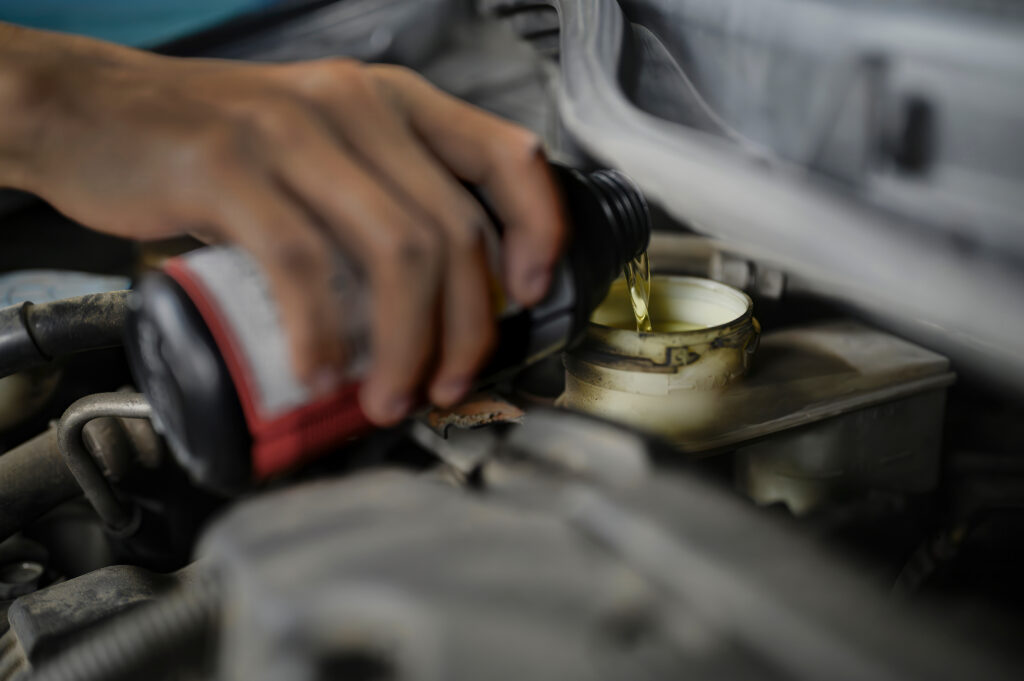
A proper brake fluid flush in Boise involves removing old, moisture-contaminated fluid and replacing it with fresh fluid that meets manufacturer specifications.
Professional brake fluid service includes:
- Removing degraded fluid from the entire system
- Flushing ABS components and valves
- Replacing fluid with the correct DOT rating
- Restoring proper hydraulic pressure and boiling point
This service protects expensive ABS modules and restores a predictable braking feel. It is one of the many critical items included in our comprehensive auto repair services for Boise drivers.
Why Skipping Brake Fluid Service Costs More Long-Term
Brake fluid service is often delayed because the brakes “feel fine.” Unfortunately, internal damage occurs silently.
Ignoring fluid service can lead to:
- Corroded ABS modules
- Seized caliper pistons
- Premature master cylinder failure
- Reduced emergency braking performance
ABS module replacement can cost thousands of dollars, while routine fluid service is a fraction of that cost.
Professional Insight From Naylor’s Auto Repair
At Naylor’s Auto Repair, we inspect brake fluid condition as part of our routine safety evaluations, especially after winter. Many Boise drivers are surprised to learn their brake fluid has never been serviced, even on newer vehicles.
Our experience shows that proactive fluid maintenance significantly reduces ABS-related failures and improves long-term brake reliability. Education is a key part of our approach—helping drivers understand why modern braking systems demand more attention than older designs.
If you would like to schedule a brake fluid inspection or flush, you can request an estimate or call 208.343.0732 to speak directly with our team.
Semantically Relevant FAQs About Brake Fluid and ABS
Is brake fluid really supposed to be changed?
Yes. Most manufacturers recommend replacement every 2–3 years due to moisture absorption.
Can moisture in brake fluid cause ABS problems?
Absolutely. Moisture promotes corrosion inside ABS modules and reduces system responsiveness.
Does winter driving really affect brake fluid?
Yes. Temperature changes, condensation, and increased ABS use accelerate moisture contamination.
How do I know if my brake fluid is bad?
Dark color, spongy pedal feel, or long service intervals are common indicators.
Is DOT 4 better than DOT 3 for Boise winters?
DOT 4 offers higher boiling points and better moisture resistance but should only be used if specified by the vehicle manufacturer.
Will a brake fluid flush improve braking feel?
In many cases, yes. Fresh fluid restores firm pedal response and consistent braking.
Can old brake fluid cause brake failure?
While rare, severe moisture contamination can significantly reduce braking performance under hard use.
Why Modern Brake Maintenance Is About Prevention
Brake systems today are more capable and more complex than ever. That complexity depends on clean, stable brake fluid to function safely. Boise’s winter conditions make fluid maintenance even more important by accelerating moisture buildup and stressing ABS components.
Understanding that brake fluid is not a lifetime fluid helps drivers protect both safety and long-term repair costs. Proactive service keeps braking systems responsive when they are needed most—especially on icy winter roads.