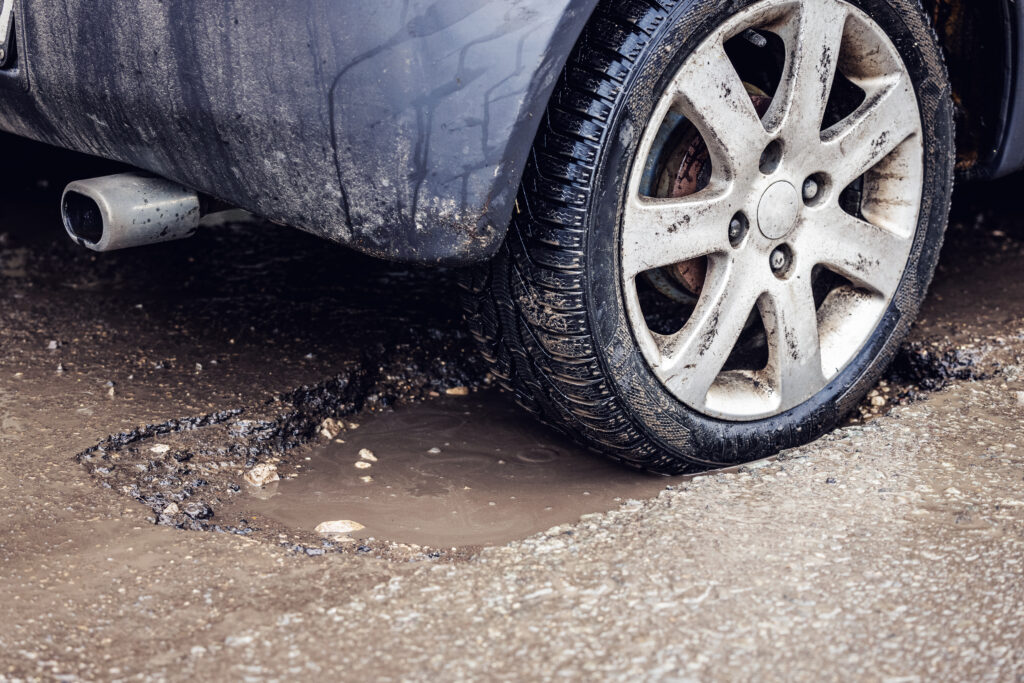
Hitting a pothole in Boise can happen fast and without warning. One second, the road looks clear, the next, you feel a sharp jolt followed by a new vibration, pull, or steering wheel shake. For many drivers, the immediate question is the same: Did I just mess up my alignment, or did I bend a wheel? At Naylor’s Auto Repair, this exact scenario plays out every spring as freeze-thaw cycles leave Boise streets riddled with potholes.
The challenge is that wheel damage and alignment problems often feel similar, but they are not the same repair—and confusing them can lead to wasted money or unresolved issues. This article explains what really happens when you hit a pothole, how professionals diagnose post-impact problems, and how inspections pinpoint the true cause of steering wheel vibration, pulling, or uneven handling.
Why Boise Potholes Cause So Many Suspension and Wheel Issues
Boise’s climate is a perfect recipe for potholes. Winter moisture seeps into cracks in the pavement, freezes overnight, and expands. As temperatures warm, the pavement weakens. By late winter and early spring, road surfaces begin to fail under traffic loads.
When a tire drops into a pothole, several things happen instantly:
- The tire compresses sharply
- The wheel absorbs a sudden impact
- Suspension components are shocked
- Alignment angles can shift
The severity depends on speed, pothole depth, tire size, and wheel construction. Low-profile tires and larger wheels are especially vulnerable.
Why Symptoms After a Pothole Can Be Confusing
Drivers often notice one or more of the following shortly after impact:
- Steering wheel vibration
- Vehicle pulling left or right
- Steering wheel off-center
- Thumping or wobbling at speed
- Uneven or noisy ride
These symptoms can be caused by either a bent wheel or an alignment issue, which is why guessing leads to incorrect repairs.
Understanding Bent Wheel Damage
What Happens When a Wheel Bends
Modern wheels, especially alloy wheels, are strong but not indestructible. When they strike a pothole hard enough, the rim can bend inward or outward. Even a small bend can disrupt balance and cause noticeable vibration.
Bent wheel damage is one of the most common pothole-related repairs in Boise, particularly in late winter.
Common Signs of a Bent Wheel
Bent wheels typically cause:
- A vibration that increases with speed
- Steering wheel shake felt mostly at highway speeds
- Thumping or rhythmic wobble
- Persistent vibration even after tire balancing
Unlike alignment issues, bent wheel vibrations are often speed-specific, becoming more noticeable between 45 and 70 mph.
Why Bent Wheels Are Often Missed
A wheel can be bent just enough to cause vibration while still holding air. From the outside, it may look fine. Without removing the wheel and inspecting it closely—or checking runout on a balancing machine—the damage can go unnoticed.
This leads some shops to recommend alignments or tire balancing that doesn’t solve the problem.
Understanding Alignment Issues After a Pothole
What an Alignment Actually Is
Wheel alignment refers to the angles at which your wheels meet the road. These angles affect straight-line tracking, steering return, and tire wear.
A pothole impact can shift:
- Toe angle (how tires point inward or outward)
- Camber angle (inward or outward tilt)
- Caster angle (steering stability and return)
Even small changes can affect handling. If you’re unsure whether your vehicle needs this service, here’s how to tell: how do I know if I need an alignment?
Common Signs of Alignment Problems
Alignment-related issues often include:
- Vehicle pulling left or right
- The steering wheel is not centered when driving straight
- Uneven tire wear over time
- Reduced steering stability
Unlike bent wheels, alignment issues usually affect vehicle direction, not vibration intensity.
Why Alignments Are Commonly Recommended First
Alignments are a logical recommendation after a pothole hit, but they are not always the correct first step. If a wheel is bent, aligning the vehicle will not eliminate vibration—and the driver may end up paying twice.
Bent Wheel vs Alignment: Key Diagnostic Differences
Understanding how professionals differentiate these issues helps drivers avoid misdiagnosis.
Vibration vs Pulling
- Vibration at speed: More often bent wheel or tire damage
- Pulling or off-center steering: More often alignment-related
Consistency of the Symptom
- Speed-dependent vibration: Strong indicator of wheel damage
- Constant pull at all speeds: More typical of alignment issues
Steering Wheel Feedback
- Shaking steering wheel: Often front wheel damage
- Crooked steering wheel: Often alignment shift
These patterns guide diagnosis but must be confirmed through inspection.
Why Tire Damage Is Part of the Equation
Potholes don’t just affect wheels and alignment. Tires can be damaged internally without visible signs.
Possible tire-related issues include:
- Broken internal belts
- Sidewall bubbles
- Flat spots from impact
- Out-of-round conditions
A damaged tire can mimic the symptoms of a bent wheel, which is why inspections must include both components.
How Shops Diagnose Post-Pothole Problems Properly
At Naylor’s Auto Repair, diagnosing pothole damage follows a structured process. This avoids guesswork and unnecessary repairs.
Step One: Visual and Physical Inspection
Technicians inspect:
- Wheels for visible bends or cracks
- Tires for bulges, cuts, or uneven wear
- Suspension components for obvious damage
This step often reveals severe wheel damage immediately.
Step Two: Balance and Runout Testing
Wheels are mounted on a balancing machine to check:
- Radial runout (up-and-down wobble)
- Lateral runout (side-to-side wobble)
Even slight deviations can cause vibration.
Step Three: Suspension and Steering Check
Control arms, tie rods, ball joints, and struts are inspected. A pothole impact can damage these components, affecting alignment and safety.
Step Four: Alignment Measurement
Only after wheel and tire integrity is confirmed does alignment testing make sense. This ensures alignment adjustments aren’t used to mask wheel damage.
Why Replacing the Wrong Part Is So Common
Many drivers experience this sequence:
- Hit a pothole
- Feel vibration
- Get an alignment
- Vibration remains
This happens because alignments don’t fix bent wheels. Without proper inspection, repairs are applied out of order.
Conversely, replacing a wheel without checking alignment can leave pulling or uneven tire wear unresolved.
When a Pothole Issue Becomes a Safety Concern
Some pothole-related damage should be addressed immediately.
Seek inspection right away if:
- The steering wheel shakes violently
- The vehicle suddenly pulls hard to one side
- Tire pressure drops after impact
- You hear clunking or knocking noises
Severe wheel or suspension damage can affect vehicle control and should not be ignored.
Why Boise Drivers See So Many Pothole Repairs in Spring
Spring is peak season for pothole damage because:
- Winter freeze-thaw cycles weaken pavement
- Snow hides road damage
- Water-filled potholes look shallow but are deep
By the time roads dry out, damage has already occurred.
Professional Insight From Naylor’s Auto Repair
We regularly see Boise drivers who were told they “just need an alignment” when the real issue was a bent wheel. We also see the opposite—wheels replaced without addressing shifted alignment angles.
Our approach is diagnostic first. We explain:
- What was damaged
- How we confirmed it
- What repairs are necessary
- What can wait
That clarity prevents repeat visits and unnecessary expense.
Frequently Asked Questions About Pothole Damage in Boise
Can a pothole bend a wheel without popping the tire?
Yes. Wheels can bend while the tire still holds air, especially alloy wheels.
Should I get an alignment after hitting a pothole?
Possibly, but only after wheels and tires are inspected for damage.
Why does my steering wheel vibrate only at highway speeds?
This usually indicates a bent wheel or damaged tire rather than an alignment issue.
Can I keep driving with a slightly bent wheel?
Short-term driving may be possible, but it can cause tire wear, vibration, and suspension stress.
Will insurance cover pothole damage in Boise?
Coverage depends on your policy. Some comprehensive plans may cover wheel and tire damage.
Why Accurate Diagnosis Saves Time and Money
Pothole damage is frustrating, but it doesn’t have to turn into a guessing game. Understanding the difference between wheel damage and alignment issues helps drivers ask better questions and avoid paying for the wrong repair.
If you hit a pothole and notice new vibration, pulling, or steering changes, the safest step is a thorough inspection that looks at wheels, tires, suspension, and alignment together—not in isolation.
Boise roads may be unpredictable, but with the right diagnostic approach, the repair process doesn’t have to be.