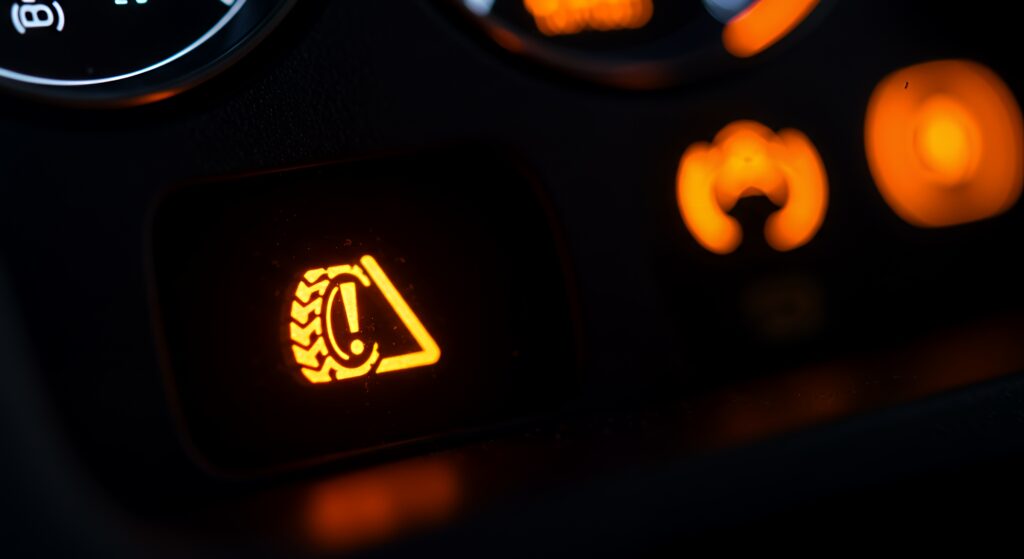
If your tire pressure warning light stays on after inflating your tires or installing new ones, the issue usually falls into one of two categories: a failing TPMS sensor battery or a required TPMS relearn procedure. Understanding the difference helps determine whether you need TPMS sensor replacement in Boise or simply a proper recalibration.
Modern Tire Pressure Monitoring Systems (TPMS) are designed to alert drivers when tire pressure drops below manufacturer recommendations. However, after winter tire changes, seasonal swaps, or battery aging, the system may not reset automatically. This guide explains how TPMS works, when sensors need replacement, and when a relearn procedure is required to fix a persistent tire pressure light.
What Is TPMS and How Does It Work?
TPMS (Tire Pressure Monitoring System) uses electronic sensors inside each wheel to monitor tire air pressure. When pressure drops significantly below recommended levels, the system activates a dashboard warning light.
Most vehicles on the road today use direct TPMS, meaning each wheel contains an individual sensor that:
- Measures air pressure
- Transmits data wirelessly to the vehicle’s control module
- Contains a sealed internal battery
Indirect TPMS systems, which rely on wheel speed sensors instead of internal pressure sensors, are less common in newer vehicles.
In Boise, where seasonal temperature swings affect tire pressure, TPMS warnings are especially common during fall and spring transitions.
Why Your TPMS Light May Stay On
If your tire pressure light does not turn off after inflation, several possibilities exist:
- One or more sensor batteries are dead
- A sensor was damaged during tire service
- The system requires a TPMS relearn
- A replacement sensor was installed, but not programmed
- Tire pressure is still outside specifications
- The TPMS module has a communication fault
Distinguishing between a battery failure and a relearn issue requires diagnostic scanning.
TPMS Sensor Battery Life: When Replacement Is Necessary
TPMS sensors contain sealed lithium-ion batteries that typically last 5 to 10 years, depending on driving frequency and environmental conditions.
Important facts about TPMS sensor batteries:
- Batteries are not replaceable separately
- When the battery fails, the entire sensor must be replaced
- Cold climates can shorten battery lifespan
- Sensors weaken gradually before failing completely
In Boise, vehicles exposed to winter temperature fluctuations may experience battery decline sooner.
Common signs of sensor battery failure include:
- Intermittent TPMS light
- One tire not reporting pressure data
- Warning message after several minutes of driving
- TPMS light blinking before staying solid
If a scan tool shows “no signal” from a sensor, replacement is usually required.
What Is a TPMS Relearn Procedure?
A TPMS relearn procedure is a recalibration process that allows your vehicle to recognize and communicate with its tire pressure sensors.
Relearn procedures are commonly required after:
- Tire rotation
- Seasonal tire swaps
- Sensor replacement
- New wheel installation
- Battery disconnection
- Module reset
Some vehicles automatically relearn sensor positions after driving at certain speeds. Others require a scan tool to trigger a relearn sequence.
Without proper relearn programming, the system may not recognize correct sensor positions or may continue displaying a warning light.
Why Tire Changes Often Trigger TPMS Lights
Boise drivers frequently switch between winter and all-season tires. During seasonal swaps:
- Sensors may be relocated
- Wheels may not contain sensors
- Sensor IDs may not match the stored vehicle memory
- New aftermarket sensors may require programming
If new wheels are installed without programming the sensor IDs, the system cannot communicate properly.
This results in a persistent tire pressure light even when pressures are correct.
How to Tell If You Need TPMS Sensor Replacement in Boise
Professional diagnostics can determine whether you need TPMS sensor replacement in Boise or a relearn procedure.
A technician will:
- Scan each sensor ID
- Check battery signal strength
- Confirm pressure readings
- Verify module communication
- Identify inactive or weak sensors
If the battery is dead or the sensor is unresponsive, replacement is required.
If the sensor functions but is not properly recognized, a relearn is typically sufficient.
Symptoms of a Dead TPMS Sensor Battery
A failing TPMS sensor battery usually presents in stages:
- Occasional warning light in cold weather
- Delayed pressure reading on startup
- One tire is consistently missing from the display
- TPMS light blinking for 60–90 seconds at startup
Blinking lights typically indicate a system fault rather than low tire pressure.
If the light remains solid without blinking, pressure may simply be low.
Can You Reset TPMS Yourself?
Some vehicles allow manual reset through:
- Dashboard menu settings
- A reset button near the steering column
- Driving at a sustained speed for a specific duration
However, manual resets do not fix dead sensors or reprogram new sensor IDs.
If the light remains on after a manual reset attempt, professional diagnostic equipment is needed.
When a TPMS Relearn Is the Correct Solution
You likely need a TPMS relearn if:
- You rotated your tires
- You installed new tires
- You changed wheels
- The battery was disconnected
- The system was reset during other service
Relearn procedures vary by manufacturer. Some require:
- Triggering sensors in a specific order
- Using a TPMS activation tool
- Programming through OBD-II connection
Without completing this step, the vehicle may misidentify sensor positions.
Why Ignoring TPMS Warnings Is Risky
Driving with a persistent TPMS light can lead to:
- Underinflated tires
- Reduced fuel efficiency
- Uneven tire wear
- Increased braking distance
- Higher blowout risk
While some drivers assume the light is a minor annoyance, it often indicates a legitimate issue.
Tire pressure directly impacts safety and vehicle performance.
Cost Considerations: Replacement vs Relearn
Cost differences between relearn and replacement are significant.
TPMS Relearn:
- Lower cost
- No parts required
- Typically completed quickly
TPMS Sensor Replacement:
- Requires new sensor hardware
- Includes installation and programming
- May require tire dismounting
Replacing sensors proactively when tires are already removed can reduce labor costs.
How Boise Climate Affects TPMS
Boise’s temperature swings influence tire pressure. For every 10-degree temperature drop, tire pressure decreases approximately 1 PSI.
Seasonal pressure changes can trigger TPMS warnings even when no sensor issue exists.
Additionally, cold exposure can weaken aging sensor batteries.
Spring and fall are the most common seasons for TPMS-related service visits.
How Long Do TPMS Sensors Last?
Most factory-installed TPMS sensors last between 6 and 8 years under normal conditions.
Factors affecting lifespan include:
- Driving frequency
- Exposure to extreme temperatures
- Road salt and corrosion
- Physical damage during tire mounting
If your vehicle is approaching 7–10 years old and TPMS issues arise, battery failure is likely.
Frequently Asked Questions About TPMS Sensor Replacement in Boise
Why won’t my tire pressure light turn off after filling my tires?
If pressure is correct but the light remains on, the issue may involve a dead sensor battery or a required TPMS relearn.
How do I know if my TPMS sensor battery is dead?
A scan tool can detect inactive sensors or weak battery signals. Blinking warning lights often indicate sensor failure.
Can a TPMS relearn fix a blinking tire pressure light?
If the light blinks due to communication errors, a relearn may resolve it. If the sensor battery is dead, replacement is required.
Do all vehicles require a TPMS relearn after tire rotation?
Not all vehicles, but many do. Some systems automatically relearn, while others require manual programming.
How much does TPMS sensor replacement in Boise cost?
Costs vary depending on vehicle type and sensor brand, but replacement involves both parts and programming labor.
When to Schedule Service
You should schedule an inspection if:
- Your TPMS light blinks at startup
- The warning stays on after inflation
- One tire does not display pressure
- You recently installed new tires or wheels
- Your vehicle is more than 7 years old
Prompt diagnostics prevent unnecessary tire wear and restore accurate pressure monitoring.
Get Your TPMS Light Fixed the Right Way
A persistent tire pressure warning light usually points to one of two causes: a failing sensor battery or a missing relearn procedure. Understanding the difference prevents unnecessary parts replacement and ensures accurate repairs.
If your TPMS warning light will not reset, Naylor’s Auto Repair provides professional diagnostics, TPMS sensor replacement in Boise, and proper TPMS relearn procedures to restore system accuracy. Contact Naylor’s Auto Repair to schedule a diagnostic appointment and get your tire pressure monitoring system functioning correctly.