New tires feel great—until uneven wear shows up early
New tires are one of the biggest maintenance purchases most Boise drivers make. The question we hear constantly at Naylor’s Auto Repair is simple: “Do I need an alignment with new tires?” The best answer is practical: not every tire install demands an alignment, but many real-world Boise driving conditions (potholes, curb taps, construction zones, gravel shoulders, and winter road impacts) can quietly knock angles out of spec and shorten tire life.
Below is a clear, technician-minded guide to deciding when alignment is the right move, what “alignment” actually changes, how it affects tire wear, and how to verify the need before you spend money.
What a wheel alignment actually does (and what it doesn’t)
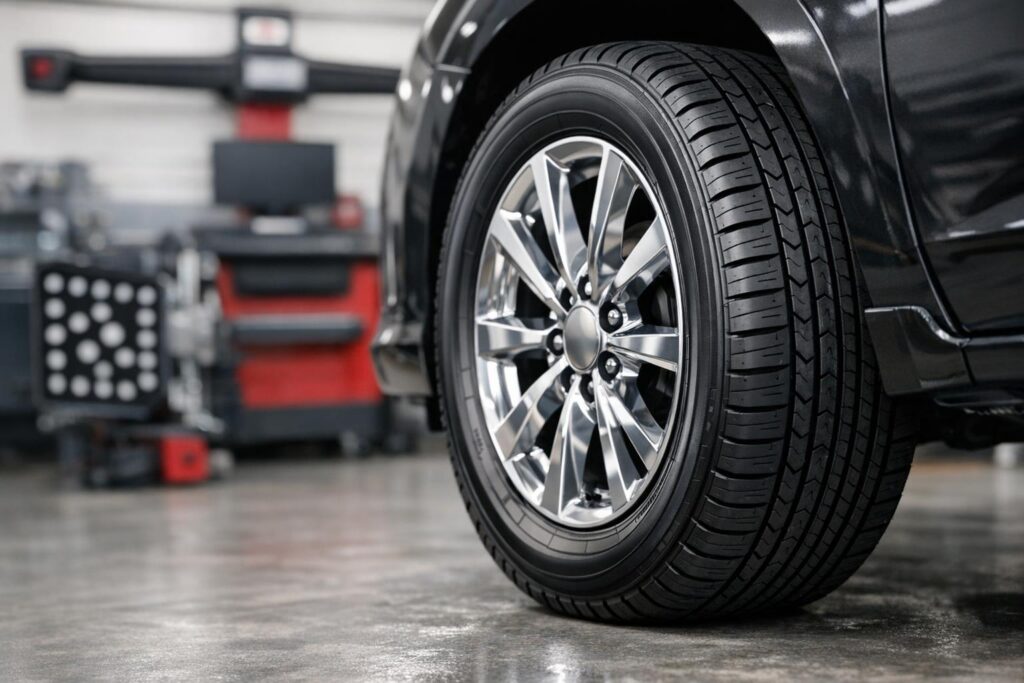
A wheel alignment adjusts your vehicle’s wheel angles so the tires roll straight and meet the road evenly. The main angles are:
Toe: whether tires point slightly inward or outward. Toe errors are a top cause of fast, “scrubbed” tire wear.
Camber: inward/outward tilt of the tire. Too much can wear the inner or outer shoulder.
Caster: steering axis angle that affects stability and steering return-to-center (not always adjustable on every vehicle).
Alignment is not the same as tire balancing. Balancing corrects vibration from weight distribution. Alignment corrects geometry that can cause pulling, off-center steering, and uneven tread wear.
When alignment with new tires is the smart move (common Boise scenarios)
If any of these apply, an alignment check (and alignment if needed) is usually money well spent:
1) Your previous tires wore unevenly. Feathering, inner-edge wear, or one tire that looks “more used” than the others is a red flag. Putting new tires on without correcting the cause can repeat the same wear pattern.
2) Your steering wheel isn’t centered, or the car drifts/pulls. If the wheel is slightly crooked on a straight road, toe and steering angle may be off.
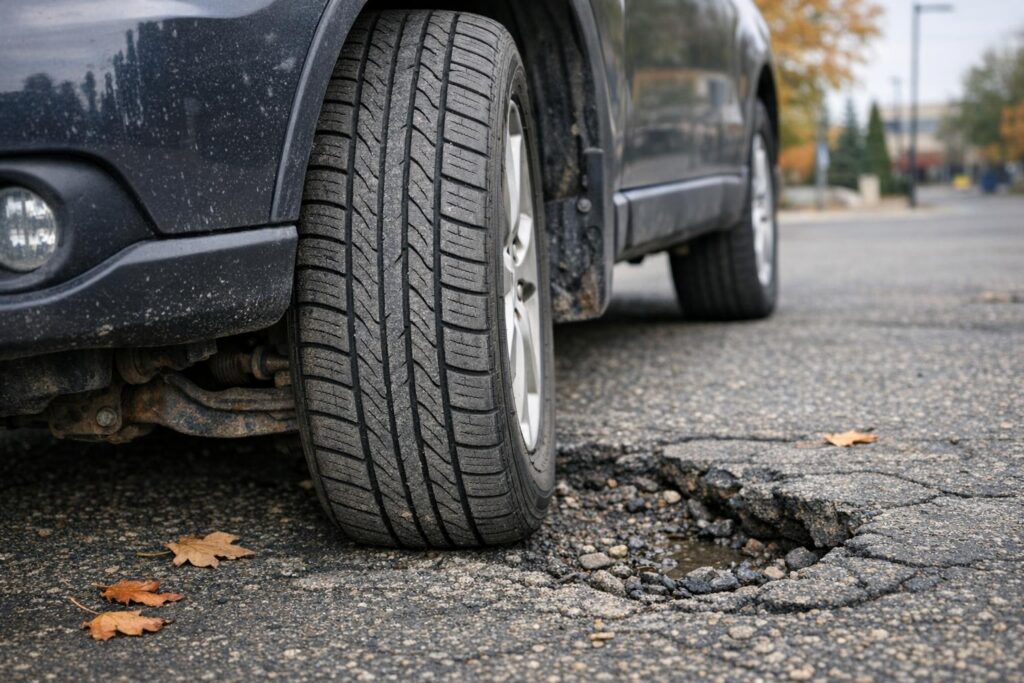
3) You hit something recently. A pothole strike, curb impact, or road debris can change alignment angles—even if nothing looks broken.
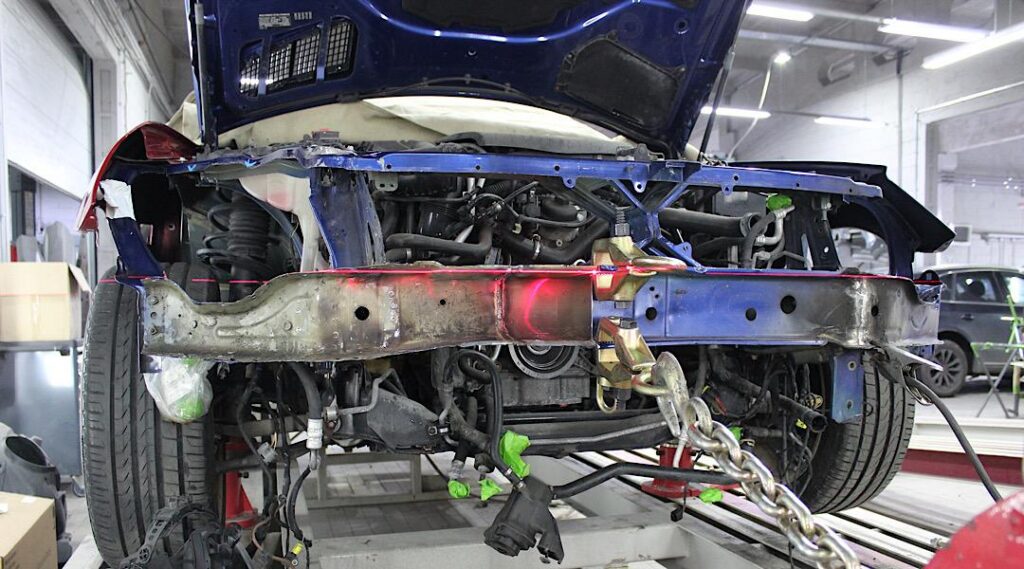
4) You replaced suspension or steering parts. Tie rods, control arms, struts, ball joints, subframe work—these typically require alignment afterward.
5) You’re buying higher-end tires. The more you spend on tires, the more alignment becomes “insurance” against premature wear.
When an alignment may be optional (and what to verify first)
If your old tires wore evenly, the vehicle tracks straight, and you haven’t had impacts or suspension work, an alignment might not be urgent. The best middle-ground is a measured alignment check—verify specs before adjusting anything.
Pro tip: Ask for a before-and-after printout. If readings are in spec and angles are stable, you’ll know the tires are starting on solid footing.
Quick comparison table: alignment vs balancing vs rotation
| Service | What it fixes | Common symptoms | Best time to do it |
|---|---|---|---|
| Wheel Alignment | Wheel angles (toe/camber/caster) | Pulling, crooked steering wheel, uneven wear | After impacts, suspension work, or with new tires (if wear/handling hints exist) |
| Tire Balancing | Weight distribution of tire/wheel | Vibration at certain speeds | During tire install; when vibration appears |
| Tire Rotation | Even tread wear across positions | Fronts wearing faster (common) | At regular service intervals; especially important for AWD/4WD |
Step-by-step: how to decide on alignment when you’re buying new tires
Step 1: Inspect your old tires before they come off
Take 60 seconds and look for uneven shoulder wear, feathering (tread feels “sharp” one direction), or one tire that looks noticeably different. If you see it, ask for an alignment check.
Step 2: Think about your last 6–12 months of driving
Any pothole hits on I-84, a curb tap parking downtown, construction detours, or winter road impacts around Boise, Meridian, Eagle, Kuna, Star, Garden City, or Nampa? Those events raise the odds alignment has shifted.
Step 3: Note how the car behaves on a flat, straight road
If it drifts, pulls under light braking, or the steering wheel isn’t centered, alignment should move up the priority list.
Step 4: Get an alignment check with measurements
Alignment shouldn’t be a guess. A check shows if toe/camber/caster are within manufacturer specs and whether something is bent or worn.
Step 5: If it’s out, fix the “why” before chasing numbers
Worn tie rods, loose ball joints, failing control arm bushings, or play in steering components can prevent an alignment from “holding.” A good shop will verify parts condition so your alignment stays consistent.
A quick used-car buyer angle (late-summer shopping reality)
If you’re shopping for a used vehicle and it already has “fresh new tires,” don’t assume it’s ready to go. New tires can mask prior problems for a while. During a pre-purchase inspection, we look for clues like uneven wear patterns, evidence of suspension wear, and signs the vehicle has been living a hard life on rough roads.
If you’re serious about protecting your budget, consider booking a Pre‑Purchase Inspection in Boise before you sign. It’s a straightforward way to spot tire-wear causes, alignment concerns, and safety issues while you still have negotiating leverage.
Did you know? Fast facts that save tires
Toe is often the biggest “tire killer” because it scrubs rubber constantly, even when the car feels mostly normal.
A vehicle can be slightly out of alignment with no warning lights—tire wear becomes the first “indicator.”
If you install new tires on a car with worn steering parts, an alignment may not stay correct for long.
Alignment and rotation work together: rotation spreads wear, alignment helps prevent abnormal wear.
Local Boise angle: what knocks alignment out faster here
Boise-area driving is a mix of freeway commuting, neighborhood streets, and seasonal conditions. Alignment shifts happen more often when you combine:
Construction zones and road edges: uneven pavement transitions can jar suspension angles.
Winter impacts: ice ruts, hidden potholes, and curb contact during slick conditions.
Gravel shoulders and rural routes: common trips toward Kuna, Star, or out beyond Eagle can mean more vibration and impacts over time.
Parking-lot curbs: low-speed curb taps are enough to change toe on many vehicles.
If your commute includes Meridian, Nampa, Caldwell, Garden City, Eagle, Star, or Kuna, and you’ve experienced any of the above, an alignment check with new tires is a solid preventative step.
Schedule an alignment check (or a full tire-wear evaluation)
Want a clear answer based on measurements—not guesses? Naylor’s Auto Repair can check alignment angles, inspect steering and suspension wear, and help you decide what’s worth doing now versus what can wait.
FAQ: Alignment with new tires
Do new tires change alignment?
New tires don’t “set” alignment angles, but they can make existing misalignment more noticeable (or hide it briefly if tread is fresh). Alignment is determined by suspension and steering geometry.
How soon should I align after installing new tires?
If you had uneven wear, pulling, a recent pothole/curb impact, or suspension repairs, do it right away. If none apply, an alignment check soon after installation provides peace of mind and a baseline.
What are the signs my alignment is off?
Common signs include drifting/pulling, steering wheel off-center, rapid or uneven tire wear, squealing in turns, or a “nervous” feel on the freeway.
Should I align if my old tires wore evenly?
If the vehicle drives straight and you haven’t had impacts or steering/suspension work, you may not need a full alignment immediately. A measured alignment check is still a smart verification step.
Can worn suspension parts ruin my new tires even after an alignment?
Yes. If components have looseness (like tie rods or ball joints), the angles can move while driving. That’s why a proper alignment process includes checking for wear that prevents the alignment from holding.
Glossary (plain-English)
Toe
The direction the tires point relative to straight ahead. Incorrect toe can scrub tread quickly.
Camber
The inward or outward tilt of the wheel when viewed from the front of the vehicle. Too much can wear inner or outer edges.
Caster
A steering angle that affects stability and how the steering returns to center after a turn.
Feathering
A tread pattern that feels smooth in one direction and sharp in the other, often linked to toe issues.
Alignment “printout”
A measurement sheet showing before-and-after alignment angles compared to factory specs.