
If your fall involves a forest road to a trailhead, a gravel two-track to a hunting spot, or forty miles of washboard to a campsite, your suspension is doing work that pavement never asks of it. The damage is rarely dramatic. It shows up as a car that feels slightly different on the drive home and a set of tires that needs replacing a season early. Drivers who leave pavement regularly bring their vehicles to Naylor’s Auto Repair with the same three findings, and all three are cheaper to catch in October than in March.
What a washboard actually does
A washboard is a series of closely spaced ridges, and at speed it inputs a rapid, repetitive vertical cycle into every joint in the suspension. Nothing breaks on the first mile. What happens instead is fatigue.
- Rubber bushings at control arms, sway bar links and strut mounts work harder than they were designed to and soften early. Worn bushings let components move, and components that move do not hold an alignment angle.
- Ball joints and tie rod ends develop play sooner. Play in a tie rod end changes toe, which is the angle tires care about most.
- Shock absorbers cycle constantly and run hot. A shock that has faded lets the wheel skip rather than follow the surface, which accelerates everything above.
The practical consequence is that a vehicle driven regularly on washboard does not so much get knocked out of alignment as drift out of it, and the drift accelerates as the joints loosen. Looseness in the steering, a vague on-center feel or a clunk over bumps are the signs worth acting on, and our notes on signs it is time to check your suspension and what bad shocks feel like cover how each one presents.
Rock strikes: the single-event damage
Washboard is cumulative. A rock strike is not. A solid hit on a submerged rock at a creek crossing, or dropping a wheel into a rut on a rutted two-track, can bend a steel wheel, crack an alloy one, tweak a tie rod, or bend a control arm in one go.
The tell is that something changed immediately: a new pull, a new vibration at speed, or a steering wheel that now sits off-center. If the vehicle felt different on the drive out, do not wait for the tires to prove it.
Check the undercarriage after any trip where you heard contact. Look at the steering rack boots for tears, the tie rod ends for damage, the skid plates for fresh impact marks, and the wheel rims for flat spots on the inner lip. A vibration that persists with correct alignment is usually a wheel or balance problem, and the case for road force balancing is worth reading if a standard balance did not solve it.
Loaded vehicles sit differently, and geometry follows ride height
This is the part most drivers never think about. Suspension geometry is specified at a particular ride height. Load the back of a vehicle with a week of camping gear, a full cooler, firewood and two dogs, and the rear settles. Camber and toe change with it, usually on the rear axle where nobody is watching.
Add a rooftop tent or a cargo box and the center of gravity moves up as well as back. Add a trailer and tongue weight pushes the rear down further while lifting weight off the front axle, which reduces steering load exactly when the vehicle is heaviest.
None of this is a reason to carry less. It is a reason to understand that a vehicle that tracked perfectly empty may wear tires unevenly on a loaded trip, and that the inspection after the trip is the one that matters.
The post-trip check, in order
Do this within a week of getting back, while you still remember what the drive felt like.
- Wash the underside. Dust and mud hide fresh damage, torn boots and leaks. Do this first or the rest is guesswork.
- Check tire pressures cold. Many drivers air down for gravel and forget to air back up. Underinflated tires at highway speed run hot and wear the shoulders.
- Inspect tire sidewalls. Gravel cuts sidewalls, and a sidewall cut is not repairable. Look at the inner sidewall as well as the outer.
- Look at the tread across its width. Wear heavier on one edge than the other points to a toe or camber change.
- Check steering rack and CV boots. A torn boot lets grit into a joint and turns a cheap part into an expensive one.
- Drive it on a flat, straight road with your hands loose. Note any pull and whether the wheel is centered.
- Book the alignment check if anything above is true, or if the trip involved more than a few hundred miles of unpaved surface.
When to book, and when to just inspect
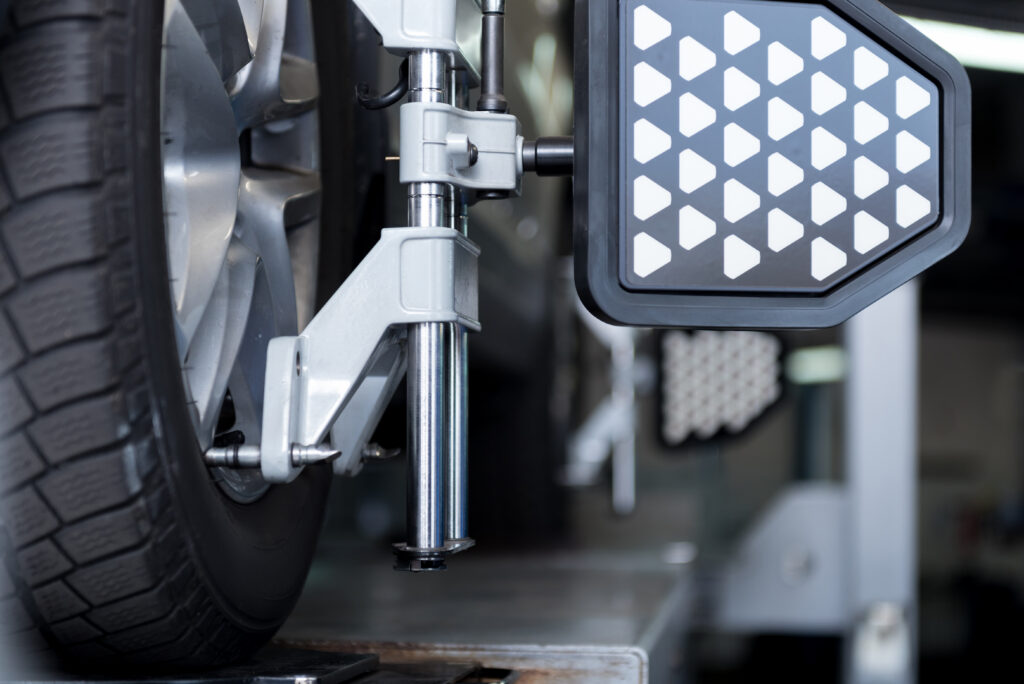
Book an alignment check if you hit something hard, if the steering wheel position changed, if there is a new pull, or if the tread shows uneven wear. Inspect only, and re-check in a few months, if the trip was short, the surface was graded gravel rather than washboard or rock, and nothing feels different.
One caution worth stating plainly: an alignment on a vehicle with worn bushings or loose joints will not hold. The technician can set the angles to specification, and the first rough road will move them again. If the suspension has play, the parts come first and the alignment follows. Deciding whether the suspension needs attention at all is covered in how to know if you need an alignment, and extending the life of your tires explains what correct geometry is actually protecting.
Frequently Asked Questions
Do gravel roads really knock a vehicle out of alignment?
Sustained washboard rarely moves the angles in a single trip. What it does is wear the joints and bushings that hold the angles in place, so the alignment drifts over a season of regular use. A single rock strike or hard rut, by contrast, can move things immediately.
Should I get an alignment after every camping trip?
No. Check after every trip; align when the check or the symptoms call for it. Drivers who are on forest roads most weekends through the season generally end up aligning twice a year rather than once.
Does airing down for gravel damage the alignment?
Airing down does not affect alignment angles. It reduces harshness, which is good for the suspension, and it increases sidewall flex, which is hard on tires at speed. The risk is forgetting to air back up before the highway.
My steering wheel is off-center after a trip, but the car drives straight. Is that a problem?
Yes, worth checking. A straight-driving car with an off-center wheel usually means the toe settings on the two front wheels are unequal even though they sum to roughly the correct total. The car tracks, but the tires are scrubbing.
Is an alignment check worth it before hunting season rather than after?
Before is better if the vehicle has been sitting or has had suspension work. After is better as a routine habit, because the damage happens on the trip. If you only do one, do it after.
Book a post-trip check
Come in after the season rather than after the tires wear out. We will measure the angles, look at the joints and boots that unpaved roads punish, and tell you plainly whether anything needs doing. See our wheel alignment services, or contact the shop to book a time that works around your weekends. If you are planning a long trip rather than recovering from one, the pre-trip checklist is the one to read first.