Every summer in Boise, wildfire smoke becomes part of the conversation. Whether the fires are in Idaho, Oregon, Washington, or California, shifting wind patterns and valley inversions can trap smoke across the Treasure Valley for days — sometimes weeks. Air quality alerts become routine. Visibility drops. The faint smell of smoke lingers everywhere.
But while many drivers focus on outdoor air quality, fewer consider what’s happening inside their vehicle.
Your car’s HVAC system is constantly pulling air through its ventilation system. During smoke season, that means your vehicle’s cabin air filter is working overtime. If it’s dirty, clogged, or overdue for replacement, you may be breathing in more particulate matter than you realize.
Understanding how wildfire smoke affects your cabin air filter in Boise, when to schedule an HVAC filter replacement, and how to reduce exposure inside your vehicle can make a meaningful difference in both comfort and health.
How Wildfire Smoke Affects Your Vehicle’s Air System
Wildfire smoke is made up of extremely fine particles known as PM2.5 — particulate matter smaller than 2.5 microns. These particles are small enough to penetrate deep into the lungs and even enter the bloodstream. They’re also small enough to pass through weakened or overloaded cabin filters.
When you drive through smoky conditions in Boise, your HVAC system pulls in outside air unless you’re in recirculation mode. That air passes through the cabin air filter before reaching your vents.
Under normal driving conditions, the filter captures dust, pollen, road debris, mold spores, and urban pollutants. During wildfire events, however, the volume of airborne particulate matter increases dramatically. What might normally take months to clog a filter can happen in a matter of weeks — or even days during severe smoke conditions.
If you’re noticing wildfire smoke in your car, your cabin air filter may no longer be able to keep up.
Why Boise Drivers Are Especially Affected
Boise’s geography makes smoke exposure worse than in many other cities. The Treasure Valley sits in a basin. During temperature inversions, smoke becomes trapped near ground level. That means prolonged exposure instead of quick clearing.
Drivers commuting along I-84, Eagle Road, or downtown Boise may spend 30–60 minutes each day inside their vehicle during heavy smoke conditions. That exposure adds up.
Unlike your home, which may have a HEPA purifier running constantly, your car relies entirely on its cabin air filter to manage incoming air quality. As part of a broader proactive maintenance routine, keeping this filter fresh is one of the simplest ways to protect both your vehicle and your health.
That filter becomes your first line of defense — and it’s often overlooked.
What a Cabin Air Filter Actually Does
Your cabin air filter is separate from your engine air filter. It is specifically designed to clean the air entering the passenger compartment through the heating and cooling system.
A properly functioning filter reduces airborne contaminants, minimizes smoke intrusion, improves airflow through vents, protects HVAC components from debris buildup, and maintains interior air quality.
When the filter becomes clogged, airflow decreases, making heating and cooling less efficient. At the same time, filtration performance declines, allowing fine particles — including smoke — to circulate inside the vehicle.
This not only affects comfort but also respiratory health.
Health Considerations During Smoke Season
Wildfire smoke exposure can irritate the throat, lungs, and eyes. For children, elderly passengers, and individuals with asthma or respiratory conditions, exposure can be more serious.
Symptoms may include headaches, coughing, fatigue, chest tightness, and increased allergy symptoms.
Many Boise drivers assume these symptoms are caused by outdoor exposure alone. However, if your car’s cabin air filter is saturated, you may be breathing in smoke during your daily commute.
Replacing a clogged cabin air filter in Boise can significantly reduce in-vehicle particulate exposure.
Signs Your Cabin Air Filter Needs Replacement
Wildfire season shortens normal replacement intervals. Even if your filter was replaced earlier in the year, heavy smoke exposure can overwhelm it.
Persistent smoky odor even with windows closed, reduced airflow from vents, longer time to cool or heat the cabin, whistling or straining sounds from vents, foggy windows due to restricted airflow, and increased allergy symptoms while driving are all warning signs.
If you experience any of these during smoke season, an HVAC filter replacement is often the simplest solution. These symptoms can also overlap with other car heater and airflow issues worth checking at the same time.
Recirculation Mode: Helpful, But Not Enough
Switching your vehicle to recirculation mode limits outside air intake and reuses interior air. During smoke season, this is helpful — but not a complete solution.
Recirculation mode reduces the amount of new smoke entering the system and helps maintain cleaner interior air temporarily. However, it does not eliminate the need for a clean filter. Over time, contaminants accumulate inside the cabin, especially when doors are opened repeatedly.
Additionally, constant recirculation can increase humidity and window fogging.
The best protection is combining recirculation mode with a clean, functioning cabin air filter.
Standard vs. Carbon Cabin Air Filters
Not all cabin air filters perform equally during wildfire season.
Standard particulate filters trap dust and pollen effectively. Activated carbon filters provide additional odor absorption and improved smoke mitigation.
Carbon filters reduce smoky smells, improve perceived air freshness, and capture finer airborne contaminants.
For Boise drivers who commute daily during wildfire season, upgrading to a carbon filter may offer noticeable improvement.
Even so, heavy smoke conditions can still shorten filter lifespan. Replacement frequency may increase during severe seasons.
How Often Should Boise Drivers Replace Cabin Air Filters?
Under normal conditions, most manufacturers recommend replacing the cabin air filter every 12,000–15,000 miles or once per year. Knowing which car parts need routine replacement — and when — helps you stay ahead of issues before they affect comfort or safety.
During heavy wildfire smoke seasons, that interval may decrease significantly.
You may need replacement mid-season during prolonged smoke events, after visible heavy haze days, when airflow noticeably decreases, or if odor persists despite recirculation.
In severe years, some drivers require two replacements in one year.
Boise’s increasing wildfire activity makes flexible replacement timing more practical than rigid mileage-based scheduling.
Smoke Contamination Beyond the Filter
If smoke persists even after replacing the cabin filter, particulate matter may have settled deeper inside the HVAC system.
Smoke particles can accumulate on evaporator cores, ductwork surfaces, and blower motor assemblies.
In these cases, additional HVAC system cleaning may be recommended to remove embedded odor and contamination.
Addressing the issue early prevents long-term odor retention and improves overall air quality inside the vehicle.
Protecting the HVAC System Itself
Beyond health concerns, a clogged cabin air filter strains the blower motor. Reduced airflow forces the motor to work harder, increasing wear and potentially shortening its lifespan.
Routine filter replacement protects blower motor efficiency, heating and cooling performance, airflow balance, and interior comfort.
Replacing a cabin air filter is inexpensive compared to replacing HVAC components. It’s also a smart item to include during a summer vehicle maintenance check — especially before smoke season peaks.
Smoke season is not just about comfort — it’s about preventing avoidable wear.
Frequently Asked Questions About Cabin Air Filter Boise Service
How do I know if wildfire smoke has clogged my cabin filter?
If airflow is reduced or a smoky odor persists inside the vehicle, the filter may be saturated.
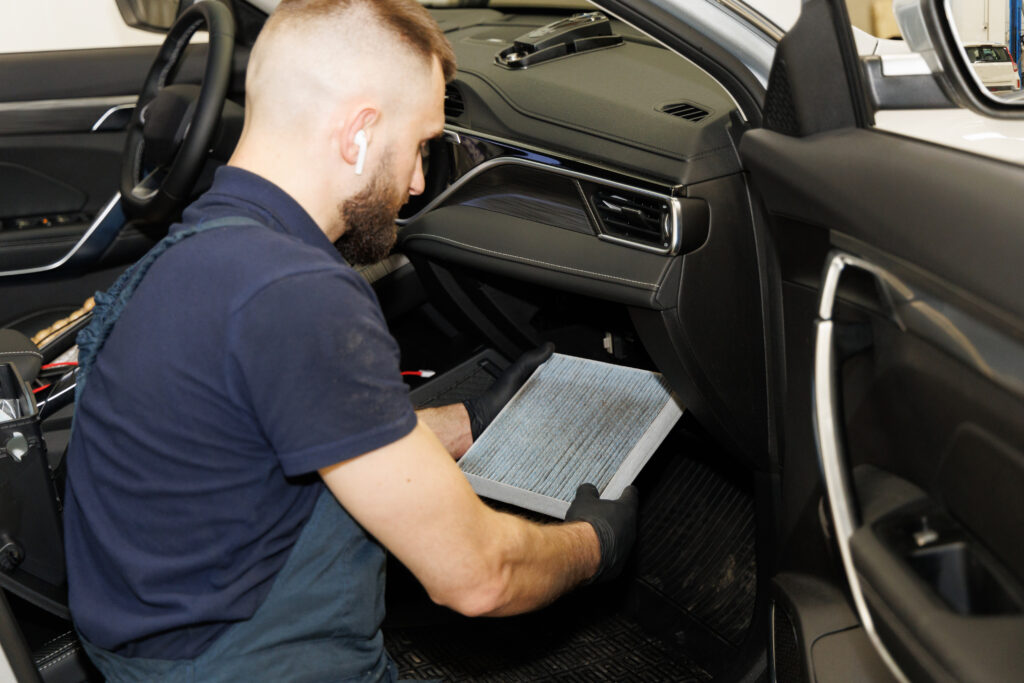
Can I see if my filter is dirty?
Yes. A visual inspection often reveals discoloration and heavy particulate buildup.
Does recirculation mode eliminate smoke exposure?
It reduces intake of outside air but does not replace filtration.
Is upgrading to a carbon filter worth it in Boise?
Yes. Carbon filters help reduce smoke odor and improve interior air quality.
How long does an HVAC filter replacement take?
Most replacements take less than 30 minutes.
Preparing for the Next Smoke Season in Boise
Wildfire smoke has become a recurring part of Idaho summers. While you can’t control regional air quality, you can control the air quality inside your vehicle.
If you’ve noticed wildfire smoke in your car, reduced airflow, or a persistent odor, it may be time for a cabin air filter replacement in Boise. Protecting your lungs starts with ensuring your HVAC system is functioning properly.
At Naylor’s Auto Repair, cabin air filters are inspected and replaced according to manufacturer specifications, with options available for upgraded carbon filtration during smoke season.
Before the next air quality alert appears, schedule your HVAC inspection and ensure your vehicle remains a safe, clean environment for every drive through the Treasure Valley.