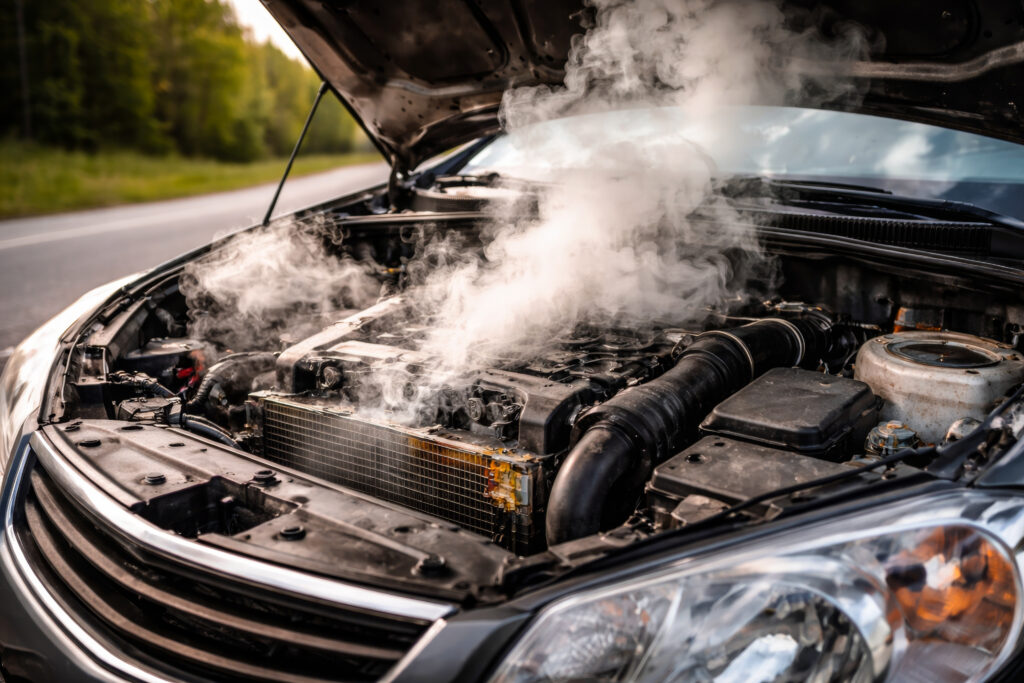
Few things are more confusing than watching your temperature gauge climb while sitting in Boise traffic — only to see it drop back to normal once you start moving again. If your car is overheating in Boise during stop-and-go driving but runs fine on the highway, the problem is rarely random. It’s usually airflow-related.
Understanding why this happens requires knowing how your cooling system functions at different speeds. When you’re driving on the highway, natural airflow moves through the radiator. When you’re stopped in traffic, your vehicle relies almost entirely on electric cooling fans and proper sensor communication to regulate temperature.
If your vehicle overheats in traffic but not at speed, there’s a strong chance you’re dealing with a cooling fan failure, airflow restriction, or a sensor issue that only shows itself under idle conditions.
Let’s break down why this happens and what Boise drivers should watch for — especially during summer heat.
How Your Cooling System Works at Different Speeds
Your engine generates heat constantly. The cooling system removes that heat by circulating coolant through the engine and into the radiator, where it dissipates into the air.
At highway speeds, air naturally flows through the grille and across the radiator fins. That airflow cools the coolant efficiently, even if the cooling fans aren’t working at full capacity.
In traffic, however, there is little to no natural airflow. The radiator depends on electric cooling fans to pull air across its surface. If those fans fail or airflow is restricted, heat builds quickly.
That’s why engine overheating in traffic is often tied directly to airflow problems rather than coolant flow problems.
The Most Common Cause: Cooling Fan Failure
The number one reason a vehicle overheats at idle but not on the highway is cooling fan failure.
Most modern vehicles use electric radiator fans controlled by temperature sensors and relays. When engine temperature reaches a certain threshold, the fan turns on automatically.
If the fan motor fails, a relay burns out, or wiring becomes damaged, the fan may not activate when needed. At highway speeds, you might never notice because airflow compensates. In traffic, however, temperatures rise quickly.
Signs of cooling fan failure include:
- Temperature gauge rising while stopped
- No fan noise when the engine is hot
- A/C performance worsening at idle
- Overheating during drive-through or stoplight waits
If you suspect cooling fan failure, it should be inspected immediately. Continued overheating can cause serious engine damage. Understanding what happens when your car engine overheats can help you act before damage becomes severe.
Why A/C Performance Drops When Overheating in Traffic
Your air conditioning system relies on the same cooling fans to regulate condenser temperature. If your cooling fan is malfunctioning, you may notice your A/C blows warm air while stopped but cools again once you’re driving.
This is a major diagnostic clue.
When drivers report that both overheating and poor A/C performance happen simultaneously in traffic, cooling fan or airflow problems are high on the suspect list.
In Boise summers, where idling in construction zones or downtown traffic is common, these symptoms often appear quickly.
Airflow Restrictions: A Hidden Problem
Not all traffic-related overheating is caused by fan failure. Airflow restriction can also prevent proper heat dissipation.
Common airflow blockages include:
- Debris trapped between radiator and condenser
- Bent or clogged radiator fins
- Plastic bags or road debris stuck in grille openings
- Aftermarket accessories blocking airflow
Boise’s dry, dusty conditions can also cause buildup that restricts airflow over time.
Even partial restriction reduces cooling efficiency at idle, when airflow is already limited.
Low Coolant vs Idle Overheating
Drivers often assume overheating means low coolant. While low coolant can cause temperature spikes, it typically causes overheating in all driving conditions — not just traffic.
If your vehicle runs perfectly at highway speeds but overheats only at idle, the issue is more likely airflow-related than fluid-level-related.
That said, coolant level should always be checked first, as leaks can compound fan or airflow issues. If you’ve spotted fluid under your vehicle, learn how to identify fluid leaks before the problem escalates.
Faulty Temperature Sensors and Control Modules
Modern vehicles rely on temperature sensors to tell the cooling fan when to activate. If a sensor provides inaccurate readings, the fan may not turn on at the proper time.
A malfunctioning engine coolant temperature sensor can cause:
- Delayed fan activation
- Incorrect gauge readings
- Check engine light illumination
- Intermittent overheating
In some cases, the fan works, but too late to prevent temperature spikes in traffic.
Proper diagnostics identify whether the issue is mechanical (fan motor) or electronic (sensor or relay).
Thermostat Issues: Less Common but Possible
The thermostat controls coolant flow between the engine and radiator. If it sticks closed, overheating can occur.
However, thermostat problems usually cause overheating in all driving conditions, not just at idle. Still, in early failure stages, symptoms may be inconsistent.
If temperature spikes are sudden and extreme, thermostat malfunction may be part of the problem.
Water Pump Considerations
Water pump failure typically results in overheating at all speeds because coolant circulation is compromised.
If overheating occurs only in traffic, the water pump is less likely to be the primary issue. However, high-mileage vehicles should still have the pump inspected if cooling system concerns arise. Staying on top of maintenance for high-mileage vehicles can help catch these vulnerabilities early.
Why Boise Traffic Makes It Worse
Boise summers create ideal conditions for traffic-related overheating.
Factors include:
- High ambient temperatures
- Construction slowdowns
- Downtown stoplight congestion
- Extended drive-through idling
- Mountain foothill traffic during recreation season
When outside temperatures are already high, cooling systems operate closer to maximum capacity. A weak fan motor that barely worked in spring may fail completely in July.
Traffic-related overheating often appears first during the hottest months.
Warning Signs You Shouldn’t Ignore
If your vehicle overheats in traffic, watch for:
- Temperature gauge climbing above normal range
- Steam from under the hood
- Coolant warning lights
- A/C blowing warm at idle
- Burning coolant smell
Overheating can warp cylinder heads, damage head gaskets, and cause catastrophic engine failure if ignored.
Even brief temperature spikes can shorten engine life over time.
Why Highway Driving Masks the Problem
Many drivers assume the issue “fixed itself” when temperature drops on the highway. In reality, airflow is temporarily compensating for a failed component.
Highway airflow acts like a giant cooling fan. Once that airflow disappears in traffic, the underlying problem returns.
This masking effect delays diagnosis — and often leads to bigger repairs later.
Professional Diagnosis Matters
Because multiple components influence cooling performance, guessing can lead to unnecessary parts replacement.
Proper diagnostic steps include:
- Verifying fan operation under load
- Testing relays and fuses
- Scanning for fault codes
- Inspecting airflow path
- Checking coolant condition
- Pressure testing the system
Accurate diagnosis saves time and prevents replacing parts that aren’t the true cause. A digital vehicle inspection gives you a clear, documented picture of exactly what’s going on with your cooling system.
Frequently Asked Questions About Car Overheating in Boise
Why does my car overheat in traffic but not on the highway?
This usually indicates airflow issues such as cooling fan failure or radiator blockage.
Can I keep driving if it only overheats at idle?
No. Continued overheating can damage engine components.
How do I know if my cooling fan is working?
When the engine reaches operating temperature, you should hear the fan engage while stopped.
Is overheating worse in Boise summers?
Yes. High ambient temperatures increase cooling system strain.
Does overheating always mean low coolant?
Not always. Airflow and electrical issues are common causes.
Address Overheating Before It Becomes Engine Damage
If your car is overheating in Boise traffic but runs fine on the highway, don’t ignore it. That symptom pattern strongly suggests a cooling fan, airflow, or sensor issue — not a random fluctuation.
Summer heat magnifies small weaknesses in the cooling system. What starts as minor temperature rise at a stoplight can escalate into serious engine damage if left unresolved.
At Naylor’s Auto Repair, comprehensive cooling system diagnostics identify the root cause of engine overheating in traffic — whether it’s cooling fan failure, airflow restriction, or sensor malfunction.
If you’ve noticed temperature spikes while idling in Boise traffic, schedule an inspection before summer heat pushes your engine beyond its limits.