A practical inspection guide for cautious Boise-area buyers—especially before fall and winter driving
A vehicle history report is a smart first step, but it can’t show you everything that matters—especially when it comes to alignment, suspension wear, and subtle structural issues that can hide behind fresh tires or a clean detail. In the Boise area, seasonal freeze-thaw cycles and potholes can amplify small problems fast, and winter roads can turn “minor handling quirks” into real safety concerns.
Below is a mechanic-minded way to connect wheel alignment symptoms with what they can mean for a used vehicle’s past—curb hits, pothole impacts, worn suspension parts, or even prior collision repairs that don’t always appear on a report. You’ll also see how local road conditions around Boise, Meridian, Eagle, Nampa, Caldwell, Kuna, and Star make alignment checks especially valuable before you buy.
Why “Boise road conditions + wheel alignment” matters when you’re shopping used
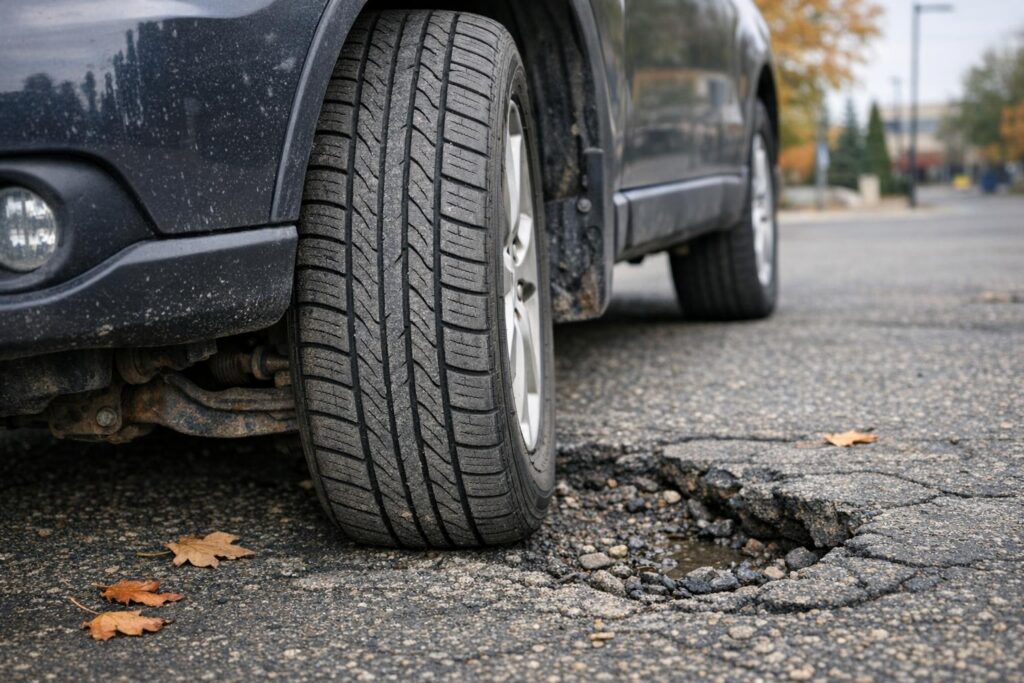
Boise drivers deal with the same alignment disruptors that hit most mountain-west cities—temperature swings, winter maintenance debris, and repeated impacts from rough pavement. Potholes tend to spike after winter because moisture gets into cracks, freezes, expands, and breaks the pavement apart; local agencies even note spring as a common time for potholes to show up. That pattern matters for used-car shopping because an impact big enough to create a pothole “thump” can also bend or loosen steering and suspension components.
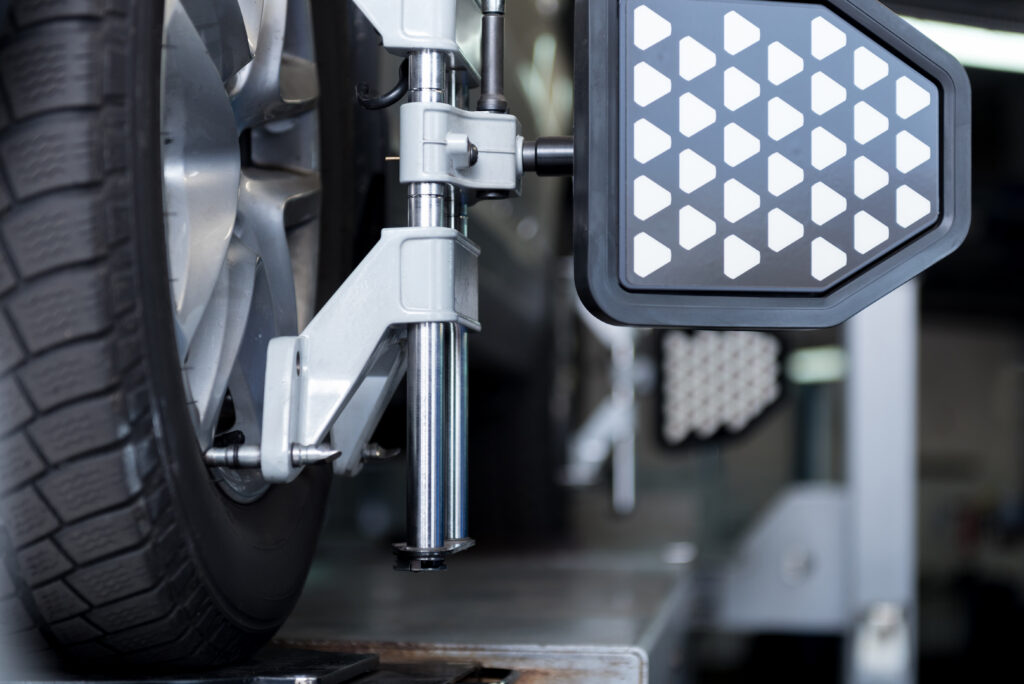
Alignment is more than “does it pull?” It’s a set of angles (toe, camber, caster) that keeps tires rolling straight and stable. When alignment is off, tires can wear quickly and unevenly, steering can feel vague, and the vehicle may be more difficult to control on slick roads. Tire manufacturers and maintenance sources consistently call out pulling and an off-center steering wheel as classic warning signs, and they also warn that severe misalignment—especially toe—can remove tread surprisingly fast.
For used-car buyers, that’s the key: alignment clues don’t just tell you “it needs an alignment.” They can also hint at how the vehicle was driven, whether it’s been hit, or if there may be underlying suspension or structural issues worth investigating before money changes hands.
What a mechanic looks for beyond the history report
A report may miss unreported collisions, curb impacts, DIY repairs, or “cosmetic-only” fixes that still changed how the vehicle tracks down the road. A thorough physical inspection focuses on evidence that the vehicle’s geometry has changed—or that parts were replaced to hide it.
1) Body and panel “truth tests” (fast, visual, revealing)
On a level surface, walk around the car slowly and look for uneven panel gaps (hood-to-fender, door-to-door, trunk-to-quarter panel). Consistent gaps usually suggest the structure is straight; uneven gaps can suggest previous collision repair or structural distortion.
Also look for paint mismatch, texture differences (“orange peel”), and overspray on rubber seals or inner edges—signs a panel was resprayed. These indicators are commonly cited as reliable exterior clues that bodywork happened, even if the seller isn’t mentioning it.
If you see multiple signs together—uneven gaps plus overspray plus a door that doesn’t close smoothly—treat it as a “slow down and verify” moment, not an automatic dealbreaker.
2) Underbody and suspension checks (where impacts leave fingerprints)
With a flashlight, check the underside for scraped pinch welds, damaged jacking points, bent brackets, fresh undercoating in one area, or unusual weld marks. Fresh paint or coating can be legitimate rust prevention—but it can also be used to disguise repairs.
Then look at wear items: torn control arm bushings, leaking struts/shocks, and uneven tire wear patterns. These don’t prove a collision, but they can explain alignment problems—and help you budget honestly.
Quick-reference table: Alignment symptoms and what they can mean
| What you notice on a test drive | Common alignment-related causes | Used-car “read between the lines” interpretation |
|---|---|---|
| Steering wheel isn’t centered while driving straight | Toe out of spec; recent impact; worn tie rods or suspension parts | Could be “just needs alignment,” or could indicate parts were bent/loosened and never corrected. A clean history report doesn’t rule out a curb hit. |
| Vehicle drifts/pulls on a flat road | Alignment angles; tire conicity; uneven tire pressure; brake drag | Pull is worth diagnosing carefully. Some pull is road crown, but consistent pulling can point to alignment or tire-related issues (and sometimes a deeper suspension problem). |
| Uneven tire wear (inside edge, feathering, one tire “chewed”) | Camber/toe issues; worn suspension; frequent impacts | A strong clue that the vehicle has been driven a while with a geometry problem. Severe misalignment can erase tread far faster than most buyers expect. |
| Vibration at speed + uneven wear | Sometimes balance; sometimes wear from misalignment; sometimes bent wheel | Ask: did it start after a pothole hit? If the seller “just put tires on,” look for why the previous set wore out. |
Step-by-step: A “methodical buyer” test drive and walkaround (15–25 minutes)
Step 1: Start with tires (they’re a storybook)
Turn the front wheels slightly and inspect inner and outer edges. Look for feathering (a sawtooth feel), inside-edge wear, or one tire wearing differently than the others. Ask for the date and brand of the tires—brand-new tires can hide old wear patterns, but they can’t hide the reason the old ones wore out.
Step 2: Confirm steering wheel center and straight tracking
On a flat, low-traffic road, hold the wheel lightly. If the steering wheel is off-center while the car goes straight, that’s a common alignment sign. If the car pulls, repeat the test after verifying tire pressures are equal (a seller can inflate one side to mask a pull).
Step 3: Brake straight-line check
In a safe area, apply the brakes smoothly from neighborhood speed. If the car darts to one side, that can be brakes, tires, or suspension. It’s not a diagnosis by itself—but it’s a reason to have a shop inspect before purchase.
Step 4: Parking lot slow-speed checks
At full lock left and full lock right (slowly), listen for clunks or binding and feel for “notchy” steering. Impacts that knock alignment out can also stress ball joints, tie rods, and control arm bushings.
Step 5: Look for collision repair tells
Check panel gaps, look for overspray on trim or weatherstripping, and scan bolts near fenders/hinges for tool marks. Combine that with any alignment symptoms and you have a much clearer picture than a report alone.
Local Boise angle: why this matters before winter
When temperatures drop, bridges and overpasses freeze first, and winter traction becomes less forgiving. If a used car already has a tendency to drift, pull, or feel unstable, icy conditions can magnify that stress and make the vehicle harder to keep centered—especially during braking or lane changes.
That’s why many Boise-area buyers schedule a pre-purchase inspection in late summer or early fall: it gives you time to address alignment, tire condition, and suspension wear before winter weather arrives across Boise, Meridian, Eagle, Kuna, Nampa, Caldwell, Star, and the surrounding commute corridors.