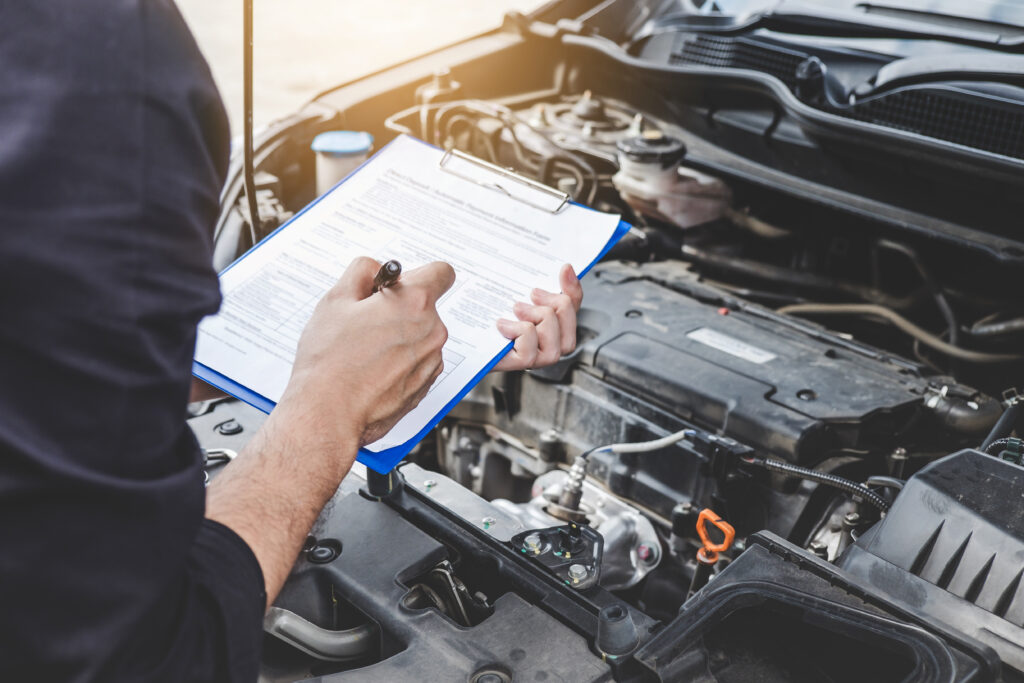
The paperwork on a used car costs almost nothing to check, and it is the part most buyers skip. A title problem or an unrepaired safety recall will not show up in a test drive, and no amount of clean bodywork makes a lien disappear. At Naylor’s Auto Repair, we see the consequences of skipped document checks every buying season in the Treasure Valley, usually after the money has changed hands.
Work the documents in the order below. Each step either clears the car or stops you before you spend money on the next one.
Step 1: Read the VIN before you read the listing
The vehicle identification number is the only thing on the car that ties it to every record about it. Find it in three places and confirm all three match: the dash plate at the base of the windshield on the driver’s side, the sticker inside the driver’s door jamb, and the number printed on the title and registration.
A mismatch is where you stop. So is a dash plate with scratched rivets, a door sticker with a different font or finish from the rest of the car, or a jamb label that has clearly been peeled and reapplied. Those are not clerical errors.
Once the numbers agree, decode it. The VIN tells you the model year, the assembly plant, the engine family and the trim the car left the factory with. That matters more than it sounds: a seller describing a base trim as a higher package, or quoting the wrong engine, is either careless or hoping you are.
What the VIN will not tell you
It will not tell you how the car was treated. Two identical VINs can describe a garage-kept commuter and a salt-belt work truck. Decoding is a starting point, not a verdict.
Step 2: Confirm title status and who actually holds it
Ask to see the title itself, not a photo, and check three things on it.
- The name. The seller’s name should be printed on the title. If it is not, you are buying from someone who does not own the car. That includes the common “I’m selling it for my brother” arrangement, which leaves you with no clean way to transfer ownership.
- Brands. Titles carry brands such as salvage, rebuilt, flood or odometer discrepancy. A branded title is not automatically a bad buy, but it changes the value substantially and it changes what insurance and future buyers will do with the car. Price it accordingly or walk.
- Liens. If a lender is listed, the loan has to be satisfied and the lien released before the title can transfer. Many lienholders now hold titles electronically, so a seller with an outstanding loan may not physically have the document at all. Sort out the payoff process before you hand over money, not after.
Step 3: Out-of-state titles and the Idaho VIN inspection
Plenty of the inventory that lands in Boise, Meridian and Nampa was last titled somewhere else. Idaho requires a physical VIN inspection before it will title a vehicle that carries an out-of-state title. The inspector confirms the number on the car matches the number on the paperwork.
County DMV offices, sheriff’s offices and some licensed dealers perform the inspection, and the rules on who can sign the form vary by county, so call your county DMV before you drive anywhere. Build the appointment into your timeline. Buyers who close a private sale on a Saturday and then discover they need an inspection on Monday often end up driving an unregistered car in the meantime.
Whether the vehicle will also need an emissions test depends on where it gets registered, and the current county rules are covered in our guide to Idaho smog and emissions testing.
Step 4: Check for open recalls, free, in about a minute
Enter the VIN at nhtsa.gov/recalls. The tool reports safety recalls that have been issued and not yet completed on that specific vehicle, going back roughly fifteen years. Manufacturers repair open safety recalls at no charge through franchised dealers regardless of who owns the car, so an open recall is not a reason to reject a car on its own.
It is a reason to ask questions. A vehicle with several open recalls has usually been outside the dealer network for a long time, which tends to correlate with the rest of its maintenance history. And a recall on a braking, steering, airbag or fuel system component is something you want closed before the car carries your family, not after.
Step 5: Read the service records like a mechanic would
Good records are boring and consistent. You want to see the same kinds of services appearing at sensible intervals across the life of the car: oil changes, filters, brake work, fluid services, tires.
What tells you more is the shape of the record set.
- A long gap in the middle of an otherwise complete history usually means a period when the car was neglected or serviced somewhere that does not keep records.
- A burst of work right before the sale can be a conscientious seller getting the car right. It can also be a seller fixing only what a buyer would notice.
- Repeat visits for the same complaint are the most useful thing in the stack. A problem that came back three times was never actually solved.
- No records at all is not a deal breaker on an older vehicle, but it shifts all of the burden onto the physical inspection.
Ask for receipts rather than a summary. A seller who serviced the car properly generally has the paper.
Where the paperwork ends
Documents describe what was reported about a car. They cannot describe its current mechanical condition, which is why a clean history report and a clean inspection are answering two different questions. We cover that distinction in Carfax versus a pre-purchase inspection.
Once the paperwork clears, the car goes on a lift. What a thorough check actually covers is laid out in what a real 125-point inspection should catch, and a scan tool adds a layer the visual check cannot reach, which we explain in our guide to reading pending codes and readiness monitors before you buy.
A printable order of operations
- Match the VIN in all three locations.
- Decode the VIN and confirm the trim and engine match the listing.
- See the physical title. Confirm the seller’s name is on it.
- Check for brands and liens.
- If the title is out of state, book the Idaho VIN inspection.
- Run the VIN through the free federal recall lookup.
- Ask for service receipts and read them for gaps and repeats.
- Run a history report.
- Book the physical inspection.
Steps one through eight can be done from a phone for the price of a history report. Step nine is the one that saves the most money.
Frequently Asked Questions
Can I check an Idaho title for a lien before I meet the seller?
Not reliably from the listing alone. The dependable method is to see the physical title, look for a lienholder in the lien section, and confirm with the seller whether a payoff is outstanding. If a lender holds the title electronically, ask the seller to contact the lender about the release process before you agree on a price.
Does a branded title mean I should walk away?
Not always. A rebuilt vehicle repaired properly can be a reasonable buy at the right price. What you cannot do is pay clean-title money for it, and you should expect a harder time with insurance and resale. Have a shop look specifically at the structural repairs before you commit.
Who pays to fix an open recall on a used car?
The manufacturer covers open safety recalls at no cost to the owner through a franchised dealer, whether the car is new, used, or on its fourth owner. Get the recall closed after purchase and keep the paperwork.
How many miles is too many on a used car in Idaho?
Mileage matters less than how those miles were accumulated and what was done about them. A highway-mileage car with complete service records is usually a better buy than a low-mileage car that sat and was never maintained. Our overview of what to look for when buying a used car covers how to weigh the two.
What if the seller will not let me do any of this?
Then you have your answer. A seller with nothing to hide has no reason to object to a VIN check, a look at the title, or a recall lookup, all of which take minutes and cost nothing.
Get the car checked before you buy it
Once the documents check out, bring the car to us. Naylor’s Auto Repair has been inspecting used vehicles for Boise buyers since 1992, and our pre-purchase inspection service gives you a written report you can take back to the seller. Contact our team to book a slot, and if you are working against a deadline on a private sale, say so when you call and we will work with it.