
A practical schedule for alignments—plus the “buyer’s checklist” that protects your tires, handling, and wallet
Boise drivers put real miles on their vehicles—commutes, weekend trips up to the foothills, highway runs toward Meridian or Nampa, and plenty of curb and pothole encounters along the way. If you’re wondering “wheel alignment—how often?”, the best answer is part mileage/time and part symptom-based. And if you’re shopping for a used car, an alignment check can reveal problems that a quick test drive won’t.
What a wheel alignment actually changes (and why it matters)
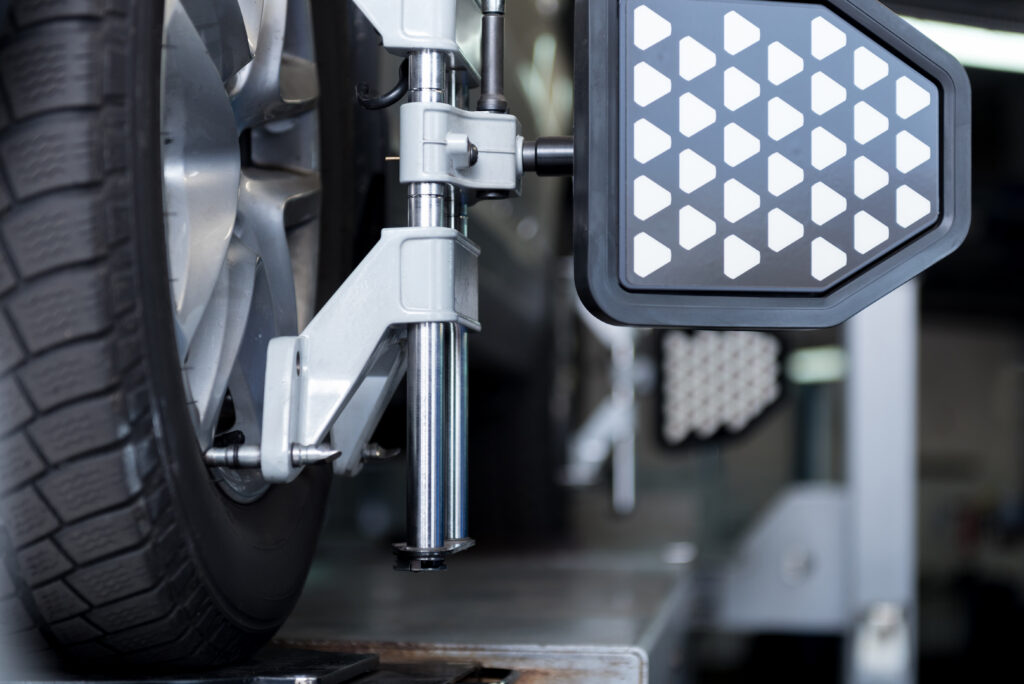
A wheel alignment is the process of measuring and adjusting your vehicle’s alignment angles—primarily toe, camber, and caster—to stay within manufacturer specs. Proper alignment helps your vehicle track straight, keeps steering predictable, and most importantly for most drivers, helps prevent premature or uneven tire wear. If alignment is off, you may notice pulling, an off-center steering wheel, or rapid wear on the inside or outside edges of your tires.
Common “misalignment” clues that drivers feel
- Vehicle pulls to one side on a flat road
- Steering wheel is crooked/off-center when you’re driving straight
- Uneven tire wear (inner/outer edges, feathering, or “chopped” feel)
- Steering feels loose, wanders, or doesn’t return to center well
- Vibration (often balance-related first, but alignment can contribute when tires wear unevenly)
So, how often should you get a wheel alignment in Boise?
There isn’t one “magic” interval that fits every vehicle, tire, and driver. A reliable approach is to combine a baseline schedule with trigger events.
| When to check alignment | Why it matters | What to do |
|---|---|---|
| Every 12 months or about 12,000 miles (good baseline) | Catches gradual drift from normal wear before it eats tires | Alignment inspection + tire wear check |
| At tire replacement | New tires can be ruined quickly if angles are out of spec | Align before/at install when possible |
| After a pothole hit, curb strike, or road hazard | One impact can shift toe quickly (and toe is a major tire-wear driver) | Check alignment + inspect wheels/suspension |
| After steering/suspension repairs (tie rods, control arms, struts) | Parts replacement changes geometry | Align immediately after repair |
| Anytime you notice pulling or off-center steering | Symptoms often show up before you can see tire damage | Confirm tire pressures first, then test/inspect alignment |
Boise-specific note: if your daily route includes construction zones, rough shoulders, frequent curb parking downtown, or regular drives to Eagle, Kuna, Star, or Caldwell where road surfaces vary, you may benefit from checking alignment closer to the conservative side of that baseline—especially if you’re trying to maximize tire life.
Quick “Did you know?” facts Boise drivers appreciate
Toe is often the fastest way to destroy tires—small toe errors can scrub tread every mile.
A car can feel “mostly fine” yet still be out of spec enough to shorten tire life.
Pulling isn’t always alignment—tire pressure, tire construction, or brake drag can mimic it.
Step-by-step: How to evaluate alignment (especially on a used car)
If you’re shopping for a used vehicle in late summer and you’re detail-oriented, you can learn a lot in 10 minutes—before you commit to a bigger inspection.
1) Start with tires (they tell the truth)
Turn the steering wheel and look at the inside edges of the front tires. Uneven wear on one edge, feathering (tread feels sharp in one direction), or cords showing is a strong sign something is off. Uneven wear can come from alignment, worn suspension parts, or neglected rotations—any of which should change your negotiation.
2) Verify tire pressures before judging “pull”
Uneven tire pressure can cause drifting or a steering wheel that feels wrong. A quick pressure check removes a common false alarm and makes your road test more meaningful.
3) Do a controlled road test
On a straight, relatively flat road, see if the steering wheel sits centered while the car tracks straight. Remember that many roads are crowned for drainage, so a slight drift can be normal. What you’re watching for is consistent pull, a noticeably crooked wheel, or twitchy “wandering.”
4) Ask for alignment evidence if tires are new
New tires are a plus—unless they were installed to mask a problem. If the seller replaced tires recently, it’s reasonable to ask if an alignment was performed. A recent alignment printout is a helpful sign of responsible maintenance.
5) Pair alignment concerns with scan tool data the smart way
A scan tool won’t measure alignment—but it can reveal why a car feels “off” (misfires, ABS issues, steering angle sensor faults, etc.). If you’re seeing pending diagnostic codes, remember: pending codes can mean the computer saw a fault once but hasn’t confirmed it across multiple drive cycles yet. That’s not something to ignore; it’s a cue to dig deeper before you buy.
If you want the highest-confidence approach, a professional inspection combines: tire/wear evaluation, suspension/steering checks, a road test, and a scan for codes and readiness monitors—so you’re not surprised after purchase.
Local Boise angle: why alignments get “used up” faster here
Boise-area driving can be tough on alignment because it’s a mix of highway speeds, seasonal road wear, construction, and everyday curb contact. Trips between Boise, Meridian, Eagle, Kuna, Star, Nampa, and Caldwell add steady miles. If you frequently encounter potholes, uneven pavement, or you’ve had a recent impact, checking alignment sooner is usually cheaper than replacing tires early.
If you’re staying proactive with rotations and fluid services, it’s also a perfect time to have alignment checked during routine visits.
Want a clear answer for your vehicle?
Naylor’s Auto Repair has been serving Boise since 1992 with ASE-certified, hybrid- and Toyota-trained technicians. If your steering wheel is off-center, you’re seeing uneven tire wear, or you’re evaluating a used car purchase, we can help you verify what’s normal vs. what needs attention.
FAQ: Wheel alignment frequency (Boise, ID)
How often should I get a wheel alignment in Boise?
A solid baseline is about once a year or around 12,000 miles, plus anytime you hit a major pothole/curb, replace tires, or notice pulling/off-center steering. Your driving routes (construction, rough roads, highway miles) can push that frequency higher.
Is an alignment the same as tire balancing?
No. Balancing corrects weight distribution to reduce vibration. Alignment corrects wheel angles (toe/camber/caster) so the car tracks straight and tires wear evenly.
My car doesn’t pull—do I still need an alignment?
Not always immediately, but it can still be out of spec enough to wear tires early. If tire wear is uneven, the steering wheel is off-center, or you just installed new tires, it’s worth checking.
Can bad tires mimic an alignment problem?
Yes. Uneven pressures, mismatched tires, or irregular wear can cause drift, vibration, or steering feel issues. A proper evaluation checks tires and suspension first so you don’t pay for an alignment that won’t “stick.”
Should I get an alignment before buying a used car?
It’s often smarter to start with a full pre-purchase inspection. Alignment results are most meaningful when combined with a suspension/steering inspection and a tire wear analysis—because worn parts can cause the alignment to drift right back out.
What if I see “pending” codes on my scan tool during a used car check?
Pending codes can indicate the vehicle detected a fault on one drive cycle but hasn’t confirmed it yet. Treat it as a prompt to investigate—especially if it relates to misfires, emissions, ABS, or steering systems.
Glossary
Wheel Alignment: Measurement and adjustment of wheel angles to meet manufacturer specifications for handling and tire wear.
Toe: The direction tires point relative to the vehicle centerline (toe-in/toe-out). Incorrect toe commonly causes rapid tread scrub and feathering.
Camber: Inward or outward tilt of the wheel when viewed from the front. Too much camber can wear inner or outer tire edges.
Caster: Steering axis angle that influences straight-line stability and steering return-to-center.
Pending Code (OBD-II): A diagnostic trouble code that has been detected but not yet confirmed by the vehicle computer across multiple drive cycles.
Drive Cycle: A set of operating conditions (start, warm-up, varied speeds/loads) that allows vehicle monitors to run and confirm or clear faults.
If your main question is “wheel alignment how often in Boise,” use the baseline (yearly/12,000 miles) and let tire wear and real-world Boise roads decide the rest. Tires are expensive—an alignment check is one of the simplest ways to protect them.