
A smarter fall checklist for Boise-area buyers who want a straight-tracking, winter-ready vehicle
If you’re shopping for a used car around Boise heading into fall, a clean history report is a good start—but it doesn’t guarantee the vehicle drives straight, wears tires evenly, or is free from the kinds of “everyday” impacts that show up after a few Idaho winters. Freeze–thaw cycles, potholes, curb taps, and past suspension work can all nudge alignment out of spec. That matters more in winter because traction is already limited, bridges and overpasses freeze first, and stable handling becomes a safety feature—not a luxury.
Why wheel alignment becomes a winter issue (not just a tire-wear issue)
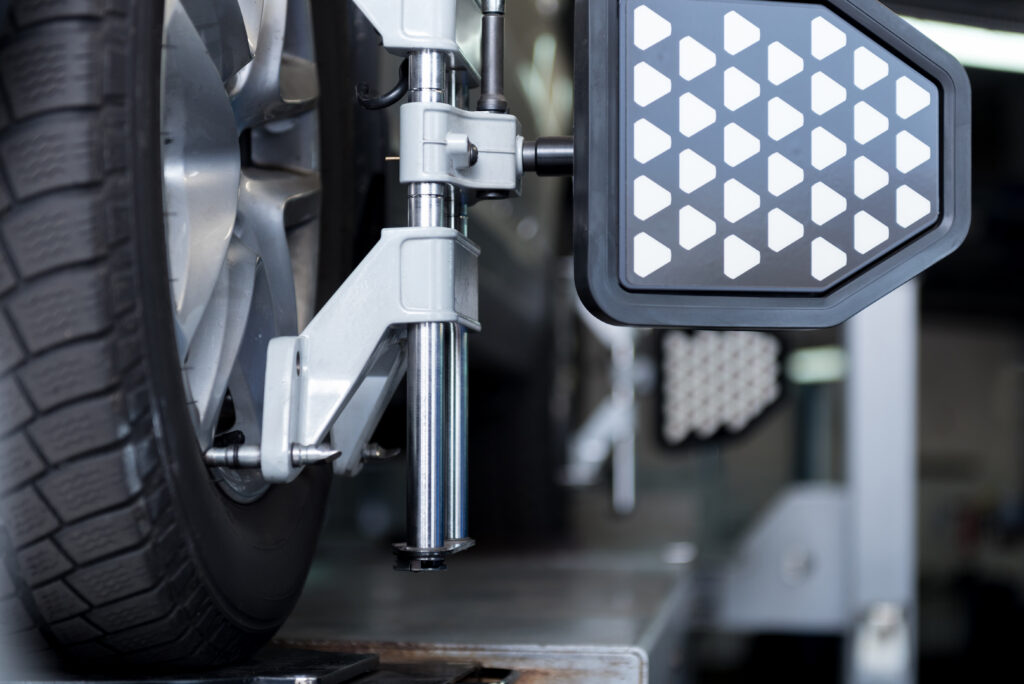
“Wheel alignment” is the adjustment of angles that determine how your tires meet the road. When those angles drift, a vehicle may pull, wander, or wear tires unevenly. On dry pavement you might compensate without noticing. On cold, slick roads, that same minor drift can feel like the vehicle is constantly searching for a line—especially at highway speeds or in rutted slush.
In Idaho, winter driving adds extra variables: cold tires behave differently, road surfaces change fast, and impacts from potholes or frost heaves can accumulate over time. Idaho transportation safety guidance also highlights that bridges and overpasses freeze first—so consistent, predictable tracking is important when traction changes suddenly.
What a mechanic looks for beyond the history report
Vehicle history reports can miss plenty: curb impacts, DIY repairs, worn suspension parts, or “fixed enough to sell” alignment issues. During a professional pre-purchase inspection, a shop will pair a road test with a lift inspection to look for physical clues that don’t show up on paper.
1) Tire wear patterns that “tell on” alignment and suspension
Tires are evidence. Even if a seller installs “new-ish” tires, uneven wear may already be starting. Common patterns technicians watch for:
Feathering (sawtooth feel across tread): often linked to toe being out of spec.
Inside or outside edge wear: can point to camber issues or worn components.
Rapid wear on one tire vs. the opposite side: suggests imbalance, alignment drift, or a suspension part not holding alignment.
2) Steering feel: off-center wheel, tiny corrections, and “wandering”
Many drivers expect a bad alignment to be a dramatic pull. In real life, early signs are subtle:
Steering wheel slightly off-center while driving straight.
Constant small corrections to keep the car centered.
Drift/pull that persists even after confirming tire pressures are equal.
A careful road test can separate “normal road crown” from a vehicle that truly doesn’t track straight.
3) Physical inspection: parts that can’t hold an alignment
An alignment adjustment is only as good as the parts supporting it. If components are worn or bent, the specs won’t “stay put.” On the lift, technicians often check:
Tie rods, ball joints, control arm bushings: looseness can cause wandering and changing alignment under braking/turning.
Struts/shocks and mounts: wear can show up as instability or poor tire contact.
Wheel bearings: play can mimic alignment problems and cause abnormal wear.
Evidence of impact: bent components, damaged wheels, or fresh undercoating in odd places.
Quick “Did you know?” facts (useful during a test drive)
A crooked steering wheel can be an alignment clue even if the car doesn’t “pull hard.”
Uneven tire wear is often cheaper to prevent than to replace—especially before winter.
Not all vibration is alignment: tire balance, wheel damage, or worn suspension can feel similar—an inspection helps pinpoint the cause.
Alignment can change after repairs like struts, tie rods, or control arms—so “recent suspension work” is a reason to verify alignment, not assume it’s handled.
Alignment symptoms vs. look-alikes (quick comparison)
| What you notice | Could be alignment | Could also be | Best next step |
|---|---|---|---|
| Car pulls/drifts on a flat road | Yes | Unequal tire pressure, tire conicity, brake drag | Check pressures; road test; inspect brakes/suspension; then align if needed |
| Steering wheel off-center while going straight | Often | Prior steering work done without centering, tire pull | Alignment check with steering wheel centered; verify tire condition |
| Uneven tire wear (edges/feathering) | Common | Worn shocks/struts, underinflation, rotation neglect | Inspect tires + suspension; confirm rotation history; align after repairs |
| Vibration at certain speeds | Sometimes | Tire balance, bent wheel, tire defect | Balance/road-force check; inspect wheels/tires; align if wear indicates |
Tip for used-car shoppers: if the seller says “it just needs an alignment,” treat that as a prompt to verify suspension condition. If parts are worn, the alignment won’t hold.
Local Boise angle: where alignment issues show up first
In the Treasure Valley, many drivers split time between city streets and higher-speed routes. If you’re commuting across Boise, Meridian, Eagle, Kuna, Star, Nampa, Caldwell, or Garden City, you’ll notice alignment problems fastest when:
Your vehicle feels stable at 25–35 mph but starts wandering at highway speeds.
The first cold snaps hit and traction becomes inconsistent on shaded roads, bridges, and overpasses.
You encounter potholes or sharp pavement edges that can jolt suspension angles out of spec.
If you’re buying a used vehicle before winter, it’s smart to schedule a pre-purchase inspection (and, if needed, an alignment check) early—before tire shops and repair schedules fill up during the first storms.
If you’re considering a hybrid for winter commuting, it’s also worth checking for tire wear consistency and suspension health—hybrids can be sensitive to tire condition for ride comfort and efficiency.
CTA: Get a pre-purchase inspection before winter sets your “new” car’s baseline
Naylor’s Auto Repair in Boise has been family-owned since 1992, with ASE-certified technicians and a process built around honest diagnostics. If you’re buying used and want clarity on alignment, tire wear, suspension condition, and red flags that don’t appear on a history report, a professional inspection can save you from surprises when temperatures drop.
Want ongoing protection after your visit? Ask about Naylor’s included 2‑year/24,000‑mile nationwide warranty on qualifying repairs.
FAQ: Winter alignment & used-car buying in Boise
Is “winter wheel alignment” a real thing, or just marketing?
Alignment matters year-round, but it becomes more noticeable in winter because traction is reduced and road conditions can be harsher. If you’re seeing uneven wear, drift, or an off-center steering wheel, checking alignment before winter is practical—not hype.
If the history report is clean, can the car still have alignment or structural problems?
Yes. Reports can miss curb impacts, pothole damage, unreported repairs, or worn parts. A pre-purchase inspection looks at physical wear patterns, suspension play, and how the vehicle behaves on a road test.
What’s the single easiest thing I can check during a test drive?
On a straight, flatter stretch of road, see if the steering wheel sits centered when the car is tracking straight. Also listen for clunks over small bumps and note whether you’re making constant tiny corrections.
Could uneven tire wear be from something other than alignment?
Absolutely. Underinflation, missed rotations, worn shocks/struts, balance issues, and damaged wheels can all contribute. That’s why shops inspect tires and suspension together rather than “just doing an alignment.”
I’m buying a used car in Meridian/Eagle/Nampa—should I still come to Boise for an inspection?
Many Treasure Valley buyers do. The key is getting the inspection done before purchase, wherever you plan to service the vehicle. If Boise is convenient for your work route or weekend errands, scheduling ahead can keep your timeline on track.
What should I do right after I buy the car to prepare for winter?
Start with a baseline: confirm tire condition and pressures, check alignment if any symptoms exist, and get a preventive maintenance review (fluids, belts, brakes, and battery health).
Glossary (plain-English terms you’ll hear during an alignment check)
Toe
Whether tires point slightly inward or outward when viewed from above. Toe issues commonly create feathered tire wear.
Camber
The inward or outward tilt of the tire when viewed from the front. Too much camber can wear one edge of the tire faster.
Caster
An angle that affects straight-line stability and how well the steering returns to center after a turn.
Road crown
The slight slope built into many roads for drainage. It can cause a mild drift even when alignment is correct—one reason road tests should be done carefully.
If you want help interpreting tire wear patterns or deciding whether a used vehicle is a smart winter buy, schedule a visit with Naylor’s local Boise auto repair team.