A smart used-car check starts with understanding the “gray areas” in OBD-II data
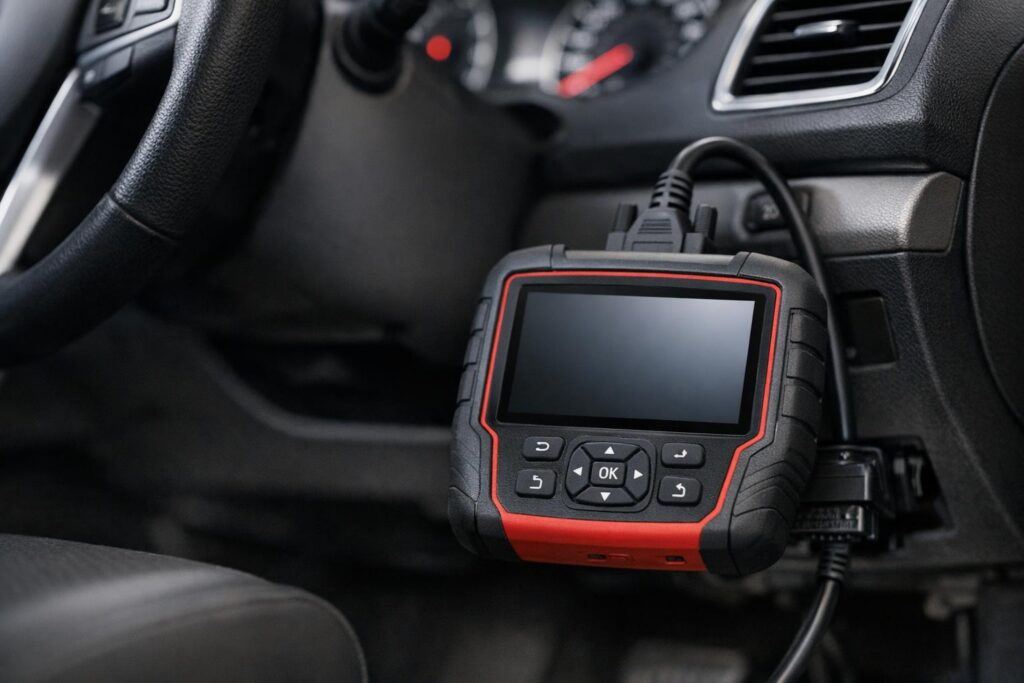
A scan tool can reveal far more than “check engine light on/off.” If you’re shopping for a used vehicle around Boise, Meridian, Nampa, Caldwell, Eagle, Kuna, Star, or Garden City, understanding pending codes vs stored (confirmed) codes helps you spot problems that may be “about to become expensive.” The goal isn’t to panic over every code—it’s to read the evidence correctly, ask better questions, and decide whether the vehicle is a good buy or a walk-away.
Quick definitions (in plain English)
Pending code: The computer detected a fault once (or not enough times to be “confirmed”). Many emissions-related faults use a “two-trip” style logic—first detection becomes pending, repeat detection becomes confirmed. Pending codes are commonly retrieved via OBD service Mode $07.
Stored / confirmed code: The fault met the criteria to be considered real, so it’s stored as a confirmed DTC (often with freeze-frame data), and it may turn on the check engine light (MIL). Stored codes are commonly retrieved via Mode $03.
Permanent code (bonus concept): Some emissions-related codes can remain as “permanent” until the vehicle proves—through successful self-tests—that the issue is truly resolved. Permanent codes are commonly retrieved via Mode $0A.
Why pending codes matter so much when buying used
A pending code is often your “early warning system.” It can mean:
A real issue is developing (small misfire, slow sensor response, weak EVAP performance, etc.). If it repeats under the right conditions, it can “graduate” to confirmed.
Conditions haven’t repeated yet (example: highway cruise, cold start, fuel level range for EVAP). The car may not have been driven in the exact way needed to re-test the system.
Someone recently cleared codes, and the vehicle is “re-learning.” Clearing codes can wipe useful evidence and reset readiness monitors, which can hide patterns temporarily.
If you’re detail-oriented (and many Boise-area buyers are), you can treat pending codes as a “needs verification” flag—not a diagnosis by itself.
What a scan tool can (and can’t) tell you from the driveway
It can tell you: which DTCs are pending vs confirmed, whether the MIL is commanded on, and whether key self-tests (“readiness monitors”) have run since the last clear/reset.
It can’t guarantee: that the issue is fixed just because the light is off, or that the car is healthy just because there are no confirmed codes at that moment. Some problems are intermittent, temperature-dependent, or only show under load.
Important parallel check: look at readiness monitors. Readiness monitors are the vehicle’s internal self-tests for emissions-related systems, and they require certain driving conditions (“drive cycles”) to complete.
Drive cycles & readiness: the “hidden context” behind pending codes
Many monitors don’t run continuously. A car may need a cold start, steady cruising, deceleration, specific fuel level ranges, and other conditions before certain tests are complete. That’s why you’ll sometimes see a pending code without a confirmed code—because the “second trip” (or a successful re-test) hasn’t happened yet.
Buyer tip (low drama, high value)
If readiness monitors show many “not ready,” ask the seller: “Was the battery disconnected or were codes cleared recently?” A fresh clear can make the scan look “clean” for a short time, while the car hasn’t yet proven it can pass its self-checks.
Pending vs stored vs permanent: comparison table for used-car shoppers
| Code Type | Typical Meaning | Where it’s commonly read | How to treat it before purchase |
|---|---|---|---|
| Pending | Fault detected but not confirmed yet (often first failure / “maturing”) | Mode $07 | Request a professional inspection; ask for test drive conditions; look for patterns & readiness status |
| Stored / Confirmed | Fault met criteria; may command MIL on; often includes stronger evidence | Mode $03 | Treat as a real issue until proven repaired; estimate cost/risk; negotiate or walk |
| Permanent | Emissions-related code that may remain until the vehicle completes successful self-tests | Mode $0A | Don’t accept “we cleared it” as proof; verify monitor completion and repair validation |
Quick “Did you know?” facts (helpful for negotiation)
Did you know: A “clean” scan right after clearing codes can be misleading because key monitors may be reset to “not ready,” meaning the car hasn’t re-proven system health yet.
Did you know: Pending codes often show up before the MIL turns on, because many systems wait for repeat failures to reduce false alarms.
Did you know: A generic code description is only a starting point—proper diagnosis may require live data, freeze-frame review, and system testing (smoke test for EVAP, fuel trim analysis, misfire counters, etc.).
Boise-area local angle: what we commonly see on late-summer used-car checks
Late summer in the Treasure Valley is prime time for used-car shopping—and also prime time for certain issues to show up:
Heat-stressed cooling and A/C performance (especially in stop-and-go). While A/C faults don’t always trigger OBD-II codes, an engine running hot or a weak fan system can create driveability symptoms that do.
EVAP-related codes that only run when conditions are just right (fuel level window + ambient temps + steady driving). These often appear as pending first.
Hybrid-specific warning signs on hybrid/plug-in models: battery cooling, temperature management, and system health require more than a basic code read. If you’re shopping for hybrids in Boise, it’s worth choosing a shop that’s hybrid-trained.
If you’re buying from Meridian, Eagle, or Nampa and commuting across the metro, it’s smart to verify the vehicle is stable on both city driving and highway cruising—because many monitors need both to complete.
For a deeper used-car check, consider a professional pre-purchase inspection rather than relying on a single scan in a parking lot.
Want peace of mind before you buy?
Naylor’s Auto Repair in Boise has been family-owned since 1992, with ASE-certified, hybrid- and Toyota-trained technicians focused on clear explanations and honest diagnostics. If your scan shows pending codes, stored codes, or “not ready” monitors, we can help you interpret what’s normal, what’s suspicious, and what needs confirmation.
Helpful next steps: preventive maintenance planning after purchase, and hybrid service if you’re buying a Prius, Camry Hybrid, RAV4 Hybrid, or similar.
FAQ: Pending codes vs stored codes (used-car buyer edition)
Should I refuse to buy a car if it has a pending code?
Not automatically. A single pending code can be a one-off event—but it’s a reason to verify. Look at readiness status, test drive under varied conditions, and consider a pre-purchase inspection to confirm whether the fault repeats.
If there are no stored codes, does that mean the car is “fine”?
No. A vehicle can have no confirmed codes and still have pending codes, incomplete readiness monitors, or intermittent issues that haven’t re-occurred. Readiness and pending data provide important context.
Why does my scan tool show “Mode $07” codes but no check engine light?
Mode $07 is commonly where pending codes are reported. Many systems wait for the fault to repeat (or meet specific thresholds) before commanding the MIL on.
Can a seller “clear the codes” to hide a problem?
Clearing codes can temporarily remove evidence, but it also resets readiness monitors and may erase helpful freeze-frame details. If you see many monitors “not ready,” ask why and insist on verification driving or an inspection.
What’s the difference between a generic code and a manufacturer-specific code?
Generic (SAE) codes are standardized across brands, while manufacturer-specific codes and data can require better scan tools and brand-specific knowledge. Standardized DTC naming/definitions are guided by SAE references such as J2012.
Glossary (quick, buyer-friendly)
DTC (Diagnostic Trouble Code): A standardized fault code stored by a vehicle module when a monitored system fails a test.
MIL (Malfunction Indicator Lamp): The check engine light. It may illuminate when a confirmed emissions-related fault is detected.
Readiness monitors: Built-in self-tests (catalyst, EVAP, O2 sensor, etc.) that must run and pass under certain conditions.
Drive cycle: A pattern of driving (cold start, cruise, decel, idle, etc.) that allows monitors to run and set to “ready.”
Freeze-frame data: A snapshot of sensor readings captured when a code sets (helpful for diagnosis). Clearing codes can erase it. )
Mode $03 / $07 / $0A: OBD services commonly used to read stored (confirmed), pending, and permanent codes.