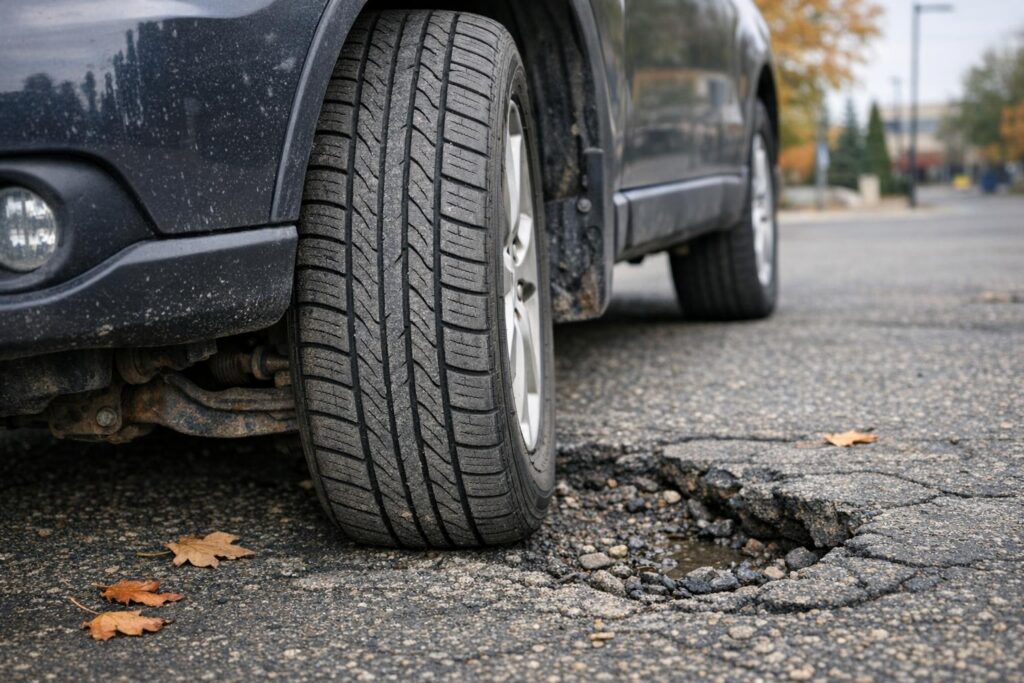
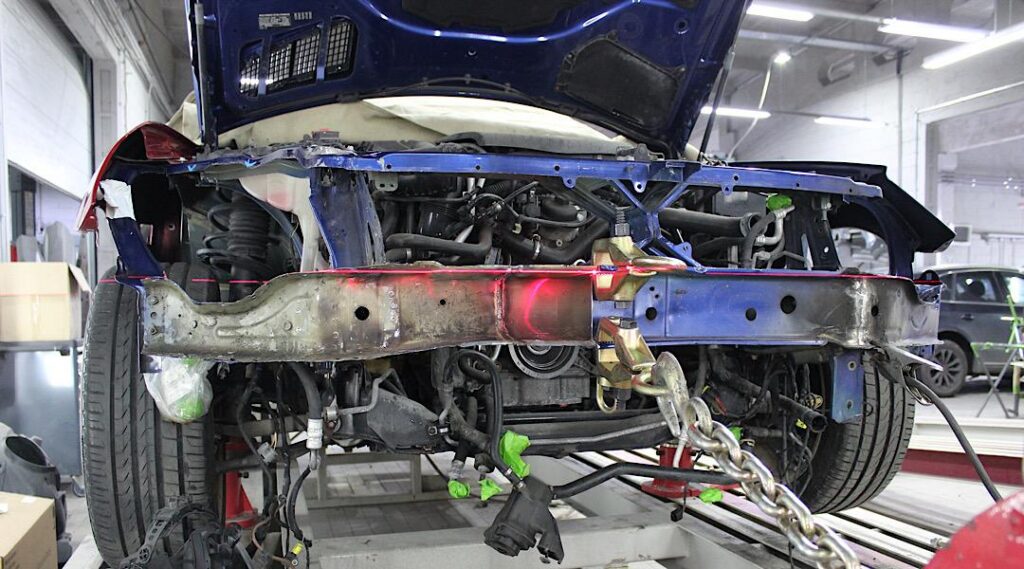
A clean Carfax-style report is a good start—structural checks are what protect you.
Used car shoppers around Boise often do the right things first: pull a history report, confirm the VIN, and look for red flags like salvage branding. But “no accidents reported” doesn’t mean “no prior impact,” and it definitely doesn’t confirm the vehicle’s structure is straight. When technicians at Naylor’s Auto Repair perform a pre-purchase inspection, we look for physical frame damage signs on a used car—the clues that show up in panel fitment, underbody components, alignment behavior, and repair evidence that a report can miss. If you’re buying ahead of winter driving, those checks matter even more.
What “frame damage” really means (frame vs. unibody) — and why it’s a big deal
Many modern vehicles don’t have a traditional body-on-frame design—most passenger cars and many SUVs use a unibody, where the structure and body form a single integrated shell. People still say “frame damage,” but the practical concern is the same: structural damage can change how the car tracks down the road, how it wears tires, how doors and glass fit, and how it manages crash forces in a future collision. Industry inspection standards also treat structural/unibody damage as a major condition issue.
Key takeaway: A history report can be incomplete. A hands-on inspection looks for a “pattern” of clues—fit, finish, welds, measurements, road behavior—that indicate the structure may not be square.
The most reliable frame damage signs on a used car (what we look for first)
Any single sign can have an innocent explanation. What raises concern is two or three issues that point in the same direction—for example, mismatched panel gaps plus overspray plus a steering pull that keeps returning. Here are the most common physical indicators technicians check:
1) Uneven panel gaps and misaligned body lines
Look at the spacing around the hood, fenders, doors, and trunk/hatch. Gaps should be consistent side-to-side. If one headlight sits “deeper,” a door edge is proud, or the hood line doesn’t match the fender line, it can indicate prior impact and structural shift (or poor repair).
2) Paint and refinish clues (overspray, texture mismatch, masking lines)
Overspray on weatherstrips, inside door jambs, underhood edges, or trim can indicate panels were resprayed after damage. We also look for differences in orange peel, metallic flop (how metallic paint “lays” in light), and hard tape lines—especially around quarter panels and rear body seams where structural damage can hide.
3) Evidence underneath: bent pinch welds, fresh undercoat, new welds, creases
Underbody inspection is where “pretty paint” stops helping. We check for wrinkled metal, cracked seam sealer, fresh undercoating that looks newer than surrounding areas, and welding that doesn’t match factory patterns. Impact can also show up as distorted radiator supports, inner fender structure changes, or shifted mounting points.
4) Steering pull, vibration, or “won’t hold an alignment” complaints
If the car drifts, the steering wheel sits off-center, or it vibrates in a way that doesn’t track with tire balance, that can be a sign the structure (or subframe) isn’t square. A seller might say, “It just needs an alignment.” Sometimes that’s true—sometimes it’s the first clue that alignment angles can’t be brought back into spec because something is bent.
5) Uneven tire wear that doesn’t match the story
Feathering, inside-edge wear, or one tire “going away” early can come from worn suspension parts—but it can also reflect a geometry problem created by impact damage. We compare wear patterns, check tire dates, and look for “new tires to mask a problem.”
Step-by-step: your at-the-seller walkthrough (10 minutes, no tools)
Before you pay for a professional inspection, you can screen out obvious problems quickly. Here’s a practical sequence:
Step 1: Walk the car in daylight and “read” the panel gaps
Check hood-to-fender, door-to-fender, and trunk gaps on both sides. Look low and along the body for waves or ripples.
Step 2: Open every door, hood, and trunk/hatch—listen and feel
Doors should latch cleanly without slamming. A door that “springs” back, rubs, or needs lifting to close can indicate hinge pillar movement or poor repair.
Step 3: Check for overspray and masking edges in jambs and underhood
Look at rubber seals, latch areas, and bolts. Factory hardware often has consistent markings/finish; disturbed fasteners or paint on bolts can suggest panels were removed or replaced.
Step 4: Test drive on a flat road (hands light on the wheel)
Note if it tracks straight, brakes straight, and if the steering wheel is centered. Also listen for clunks over bumps—impact can damage control arms, struts, wheel bearings, and subframe mounts.
Tip for Boise fall shopping: If the vehicle will see snow trips to Bogus Basin, weekend drives toward McCall, or commutes from Meridian/Nampa/Caldwell/Eagle/Kuna, stable straight-line tracking and predictable braking are not “nice-to-haves.” They’re safety basics.
What a professional pre-purchase inspection adds (and why it’s worth it)
A professional inspection goes beyond “spot checks” by putting the vehicle on a lift, checking steering/suspension wear points, confirming tire and brake condition, scanning for diagnostic codes, and correlating symptoms to root causes. If we suspect structural concerns, we document what we’re seeing (repair evidence, underbody distortion, alignment-related symptoms) so you can make a clear decision: negotiate, request repair documentation, or walk away.
Quick comparison: history report vs. physical inspection
| Check | History report | Mechanic inspection |
|---|---|---|
| Accident/claim events | Sometimes | Not the focus |
| Paintwork/repair evidence | Rarely | Yes (visual + underbody) |
| Alignment/handling red flags | No | Yes (road test + steering/suspension checks) |
| Hidden undercarriage damage | No | Yes (lift inspection) |
Did you know? Quick facts that help you avoid expensive surprises
“No accidents reported” isn’t the same as “no accidents.” Some repairs never make it into databases, especially minor impacts handled out-of-pocket.
Fresh undercoating can be a clue. Sometimes it’s normal rust prevention—other times it’s used to hide welds, creases, or repaired seams.
Repeated alignments are a pattern. If a seller mentions it “keeps going out,” ask for alignment printouts and repair receipts.
Local Boise angle: winter driving makes straight tracking non-negotiable
Boise-area buyers often shop in late summer and fall, then discover the car’s weak points once temperatures drop and road conditions change. A vehicle with structural or suspension issues may feel “fine” on dry pavement but become unpredictable when traction is limited. If you’re commuting across the Treasure Valley—Boise, Meridian, Nampa, Caldwell, Eagle, Kuna, Star, Middleton—or heading into higher elevations, it’s smart to verify:
• The vehicle tracks straight and brakes straight
• Tires are wearing evenly (not hiding an alignment problem)
• There’s no evidence of underbody impact or questionable repairs
CTA: Book a Pre-Purchase Inspection in Boise
If you’re seeing potential frame damage signs on a used car—or you just want a confident yes/no before you buy—schedule a pre-purchase inspection with Naylor’s Auto Repair. We’ll help you understand what’s normal wear, what’s repair evidence, and what should change your decision before winter.
Helpful related pages: Pre-Purchase Inspection | Wheel Alignment Services | Preventive Maintenance
FAQ: Frame damage signs on a used car
Can a car have frame/unibody damage even if the history report is clean?
Yes. Reports depend on what was reported to insurers, repair networks, auctions, or state systems. Physical inspection looks for repair evidence and geometry symptoms that don’t require a database entry.
Are uneven panel gaps always a sign of an accident?
Not always. Some vehicles have minor factory variation, and worn hinges can affect door alignment. What matters is a pattern: mismatched gaps plus refinish clues, plus underbody evidence, plus handling/alignment complaints.
What’s the fastest “red flag” during a test drive?
A consistent pull, a steering wheel that won’t center, or braking that darts left/right can indicate alignment, tire, brake, or structural/suspension issues. It’s not a diagnosis by itself, but it’s a strong reason to inspect on a lift.
Can “new tires” hide frame damage signs?
New tires can temporarily mask uneven wear patterns, but they won’t fix the root cause if alignment angles can’t be set correctly or if suspension mounting points are shifted. An inspection can still reveal the underlying issue.
If frame/unibody damage is confirmed, should I walk away?
It depends on severity, repair quality, documentation, and price. Minor, properly repaired damage with clear documentation can be acceptable for some buyers. Significant structural repair evidence, poor-quality welds, or persistent alignment/handling issues usually means it’s safer to keep shopping.
Glossary (quick definitions)
Unibody: A vehicle construction method where the body and structural frame are integrated into one unit.
Panel gap: The visible spacing between adjacent body panels (hood/fender, door/fender, trunk/quarter panel). Consistency matters.
Overspray: Fine paint mist that lands on areas that should not be painted (rubber seals, trim, inner edges), often indicating refinishing.
Subframe: A structural cradle that supports the engine, suspension, or drivetrain components. Impacts can bend a subframe and affect alignment.
Alignment angles (camber/caster/toe): Measurements that describe how the wheels sit and steer. If angles can’t be set within spec, something may be bent or worn.